




Manufacturing Social Media Guide for B2B Growth
Manufacturing Social Media Guide for B2B Growth

TL;DR:
- Manufacturers should prioritize LinkedIn and YouTube to generate high-quality leads and build trust early in the buyer's research process. Authentic, behind-the-scenes content created through monthly batch sessions effectively engages technical buyers and shortens sales cycles. Measuring social ROI involves tracking website traffic, lead conversions, and cost per qualified lead to demonstrate tangible business impact.
A manufacturing social media guide is a structured framework that helps industrial companies use platforms like LinkedIn, YouTube, Facebook, and Instagram to generate qualified leads, build brand credibility, and stay visible throughout long B2B buying cycles. Most manufacturing firms treat social media as an afterthought, posting sporadically and measuring nothing. That approach leaves real pipeline on the table. This guide gives you a practical, platform-by-platform strategy built around the realities of manufacturing marketing: limited time, technical buyers, and complex sales cycles that reward consistency over cleverness.
Which social media platforms matter most for manufacturers
Not every platform deserves your attention. The right social media strategy for manufacturers starts with concentrating resources on channels where your buyers actually spend time and make decisions.
| Platform | Primary use case | Best content types | Advertising options |
|---|---|---|---|
| Lead generation, B2B networking | Thought leadership, case studies, product posts | LinkedIn Ads, Sponsored Content, InMail | |
| YouTube | Education, trust building | Product demos, plant tours, tutorials | Pre-roll ads, display ads |
| Employer branding, community | Job postings, local news, culture posts | Retargeting, lookalike audiences | |
| Visual storytelling, culture | Shop floor photos, Reels, project highlights | Story ads, Reels ads |
LinkedIn is the non-negotiable starting point. Over 80% of B2B leads in manufacturing originate from LinkedIn, making it the single highest-return platform for companies selling to procurement managers, engineers, and operations directors. That figure reflects a fundamental shift in how industrial buyers research vendors before ever contacting a sales rep.
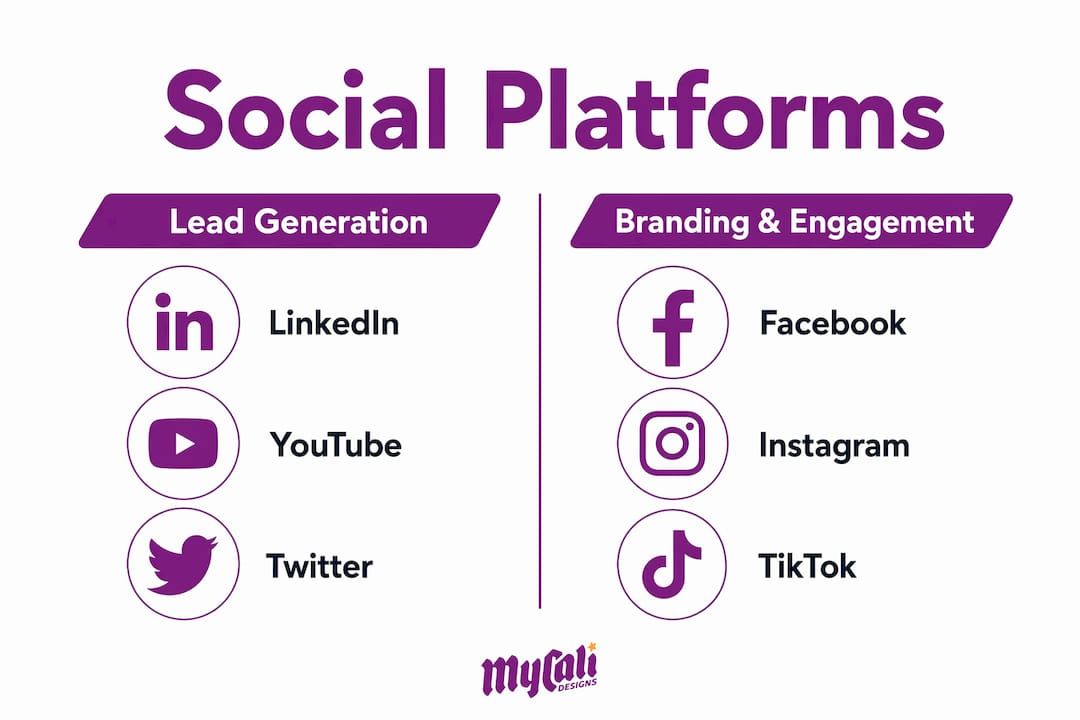
YouTube earns the second priority slot because of how powerfully video moves technical buyers. 93% of B2B buyers say video content influences their purchasing decisions. A well-produced plant tour or product demonstration does more to build trust than any brochure, because it shows your process rather than just describing it.
Facebook serves manufacturers best for employer branding and local community engagement rather than direct lead generation. If you are recruiting skilled tradespeople or building goodwill in your region, Facebook delivers. For pipeline, it plays a supporting role through retargeting campaigns that keep your brand in front of website visitors.
Instagram's Reels and visual posts give manufacturers a surprisingly effective channel for showcasing craftsmanship and company culture. Precision machining, custom fabrication, and quality control processes photograph beautifully. That visual proof of capability resonates with buyers who want to see the work before they commit.
Pro Tip: Start with LinkedIn and YouTube only. Master both before adding Facebook or Instagram. Spreading across four platforms at once with limited resources produces mediocre results on all of them.
How to build a content strategy that resonates with technical buyers
The most common mistake manufacturers make on social media is writing like a corporate press release. Technical buyers, engineers, and procurement managers respond to content that feels real and specific, not polished and vague.

Authentic content is the foundation of any industrial social media marketing guide worth following. Buyers trust people more than logos, especially when employees share expertise openly. That means your best content often comes from your shop floor supervisor explaining a quality challenge, not from your marketing department writing about "world-class solutions."
Here are content categories that consistently perform well for manufacturers without requiring heavy production resources:
- Behind-the-scenes shop floor content: Short videos or photos showing your team at work, equipment in action, or a product moving through production stages
- Employee spotlights: Brief profiles of machinists, engineers, or quality inspectors explaining their role and what they take pride in
- Project milestones: Before-and-after posts showing a completed custom order, a new machine installation, or a process improvement
- Educational posts: Quick tips on material selection, tolerances, or industry standards that demonstrate your technical depth
- Customer testimonials: Short video clips or written quotes from clients describing a specific problem you solved
The POST Framework gives you a repeatable structure for content that connects. POST stands for Personalized, Open-ended, Style-consistent, and Timely. Personalized means addressing a specific buyer pain point rather than speaking to everyone. Open-ended means inviting comments or questions to drive engagement. Style-consistent means your tone and visual approach stay recognizable across every post. Timely means connecting content to industry events, trade shows, or seasonal production cycles.
Video content deserves special emphasis in your social media content ideas for manufacturers. A two-minute virtual plant tour posted on YouTube and shared to LinkedIn can do more for buyer confidence than six months of text posts. The power of storytelling through video is particularly strong in manufacturing because the physical process of making something is inherently compelling to watch.
Pro Tip: Film three to five short videos in a single afternoon on your shop floor. One camera operator and one subject talking naturally about their work produces content that outperforms scripted corporate videos every time.
How to build a workflow that keeps your social media consistent
Consistency is the single biggest challenge manufacturers face with social media. Production schedules, customer deadlines, and compliance reviews all compete for the same limited hours. The solution is not working harder. It is building a system that removes daily decision-making from the process.
Batch content creation is the operational technique that makes consistency achievable. Dedicated monthly content sessions can generate 8 to 12 posts in a single sitting, which is enough to maintain a steady presence across LinkedIn and YouTube without daily effort. Think of it like production planning: you do not manufacture one unit at a time when you can run a batch.
Here is a practical four-step workflow to follow each month:
- Schedule a two-hour content session on the first Tuesday of each month. Block it on the calendar like a production meeting. Bring your phone, a team member willing to be on camera, and a list of five topics drawn from recent customer questions or project wins.
- Capture raw content during that session. Film two to three short videos, take ten to fifteen photos on the shop floor, and draft three to four text post ideas. Raw is fine. Authenticity beats production value on LinkedIn.
- Run approvals in parallel, not in sequence. Manufacturing companies often delay publishing because legal, technical, and management reviews happen one after another. Set a 48-hour approval window and send all content to reviewers simultaneously. Structured approval workflows are critical in manufacturing because compliance and technical reviews can stall publishing for weeks if left unmanaged.
- Schedule everything using a tool like Social Champ or Buffer. Load the approved posts into your scheduling tool and set publish dates across the month. You are done until next month's session.
A content calendar is the connective tissue of this system. Align your posting schedule with trade shows like IMTS or FABTECH, product launches, and hiring pushes. That alignment makes your social activity feel purposeful rather than random, and it gives your sales team content to share during active deals.
Pro Tip: Integrate your social media workflow into your existing operations rhythm. Tie content capture to quality audits, new equipment arrivals, or customer site visits. The content is already happening. You just need to document it.
How to measure social media ROI in manufacturing
Measuring the return on social media in manufacturing requires connecting platform activity to business outcomes, not just counting likes and followers. Proving ROI requires tracking specific KPIs including website referral traffic, lead conversion rates, and cost per qualified lead.
Here is the core measurement framework to build:
- Website referral traffic: Use Google Analytics to track how many visitors arrive from LinkedIn, YouTube, or Facebook each month. A rising trend confirms your content is driving interest beyond the platform itself.
- Lead conversion rate: Track how many social-sourced website visitors fill out a contact form or request a quote. This connects social activity directly to pipeline.
- Cost per qualified lead (CPL): For paid campaigns on LinkedIn Ads or Facebook, divide total ad spend by the number of qualified leads generated. This number tells you whether paid social is worth scaling.
- Engagement rate by post type: Compare how behind-the-scenes videos perform against product announcements. The data tells you what your audience actually wants to see more of.
- Sales team feedback loop: Ask your sales reps monthly whether prospects are mentioning your social content during calls. This qualitative signal is often the most direct evidence that social is influencing deals.
Consistent social presence reduces perceived risk and improves conversion rates across long B2B sales cycles. That effect is real but slow, which is why a 90-day measurement window gives you more meaningful data than a 30-day snapshot. Build a simple dashboard in Google Looker Studio or a spreadsheet that pulls these five metrics monthly and share it with leadership to demonstrate progress.
Key takeaways
Manufacturers who commit to LinkedIn and YouTube with authentic, consistent content generate measurably stronger leads and shorter sales cycles than those who post sporadically across every platform.
| Point | Details |
|---|---|
| Prioritize LinkedIn and YouTube | These two platforms drive the highest-quality leads and buyer trust for manufacturers. |
| Authenticity outperforms polish | Employee stories and shop floor content build more trust than corporate marketing copy. |
| Batch content creation works | Monthly two-hour sessions produce enough posts to maintain a consistent presence all month. |
| Measure what connects to revenue | Track referral traffic, lead conversion rates, and CPL rather than vanity metrics. |
| Build early visibility | Manufacturers must appear in buyer research phases before sales conversations begin. |
Why most manufacturers are playing social media on hard mode
I have worked with manufacturing clients who had genuinely impressive operations and zero social media presence. When I asked why, the answer was almost always the same: "Our customers find us through referrals. We don't need it." That reasoning made sense ten years ago. It does not hold up now.
Manufacturers must build social visibility early in the buyer's research phase, because social media cannot later correct a lack of online presence when a prospect is already deep in a competitor's pipeline. By the time a buyer reaches out to three vendors for quotes, they have already formed impressions based on what they found online. If you were not there during that research phase, you are starting the conversation at a disadvantage.
The manufacturers I have seen succeed on social media share one trait: they stopped treating it as a marketing function and started treating it as a credibility function. They post because it makes them look like the kind of company a serious buyer wants to work with. That shift in mindset changes everything about how content gets made and approved.
My honest recommendation is to focus depth over breadth. Master LinkedIn first. Get your team comfortable sharing expertise on the platform. Then build a YouTube library of technical content that answers the questions your sales team hears every week. Those two channels, done well, will outperform a scattered presence across five platforms every time. A strong manufacturing brand strategy underpins all of it, because social media amplifies your brand. It does not replace it.
— Cesar
Ready to build a manufacturing brand that social media can amplify?
Social media works hardest when it is backed by a clear, professional brand identity. If your logo, visual system, or messaging does not reflect the quality of your work, even the best content strategy will underperform. That is where Mycalidesigns comes in.
We help manufacturing companies build the brand foundation that makes every LinkedIn post, YouTube video, and Instagram Reel more credible. From custom logo and brand identity design to full digital marketing and social media management, Mycalidesigns gives you the tools to show up professionally across every channel. If you are ready to turn your social presence into a real growth asset, we are ready to help you build it.
FAQ
What is a manufacturing social media guide?
A manufacturing social media guide is a structured plan that helps industrial companies use platforms like LinkedIn, YouTube, and Facebook to generate leads, build brand credibility, and stay visible during long B2B buying cycles.
Which platform is best for B2B manufacturing lead generation?
LinkedIn is the strongest platform for B2B manufacturing leads, driving over 80% of B2B leads in the industry due to its concentration of procurement managers, engineers, and operations decision-makers.
How often should a manufacturing company post on social media?
Two to four posts per week on LinkedIn is a practical starting point. Batch content creation sessions once a month can generate enough material to maintain that cadence without daily effort.
What content works best for manufacturing companies on social media?
Behind-the-scenes shop floor videos, employee spotlights, and customer testimonials consistently outperform generic product announcements because they show real capability and build buyer trust through authenticity.
How do you measure social media ROI for a manufacturing business?
Track website referral traffic from social platforms using Google Analytics, measure lead conversion rates from social campaigns, and calculate cost per qualified lead for any paid advertising to connect social activity directly to revenue.
Recommended
Recent Posts