



The Role of Visuals in Restaurant Marketing
The Role of Visuals in Restaurant Marketing
TL;DR:
- Visual content drives customer decisions by influencing purchasing and increasing sales across all restaurant channels. Consistent and high-quality visuals, including photos and short videos, build brand recognition and trust, significantly boosting engagement. Matching visual strategies to restaurant type and maintaining authenticity are key to effective restaurant branding.
Visual content is the single most powerful driver of customer decisions in the food industry. The role of visuals in restaurant marketing goes far beyond decoration. Photos, videos, and consistent branding directly determine whether a diner clicks "order now" or scrolls past. 87% of consumers say photos or videos have directly influenced their food ordering decisions. That number alone tells you visuals are not a nice-to-have. They are the conversion engine behind every successful restaurant brand.
How does visual content influence customer behavior and sales?
Food photography and video content shape purchasing decisions before a single bite is taken. The brain processes images faster than text, and in a competitive market, that speed is everything. A diner scrolling a delivery app or social feed makes a judgment in under two seconds. Your visuals either earn that click or lose it.
The data on photo menus is hard to ignore:
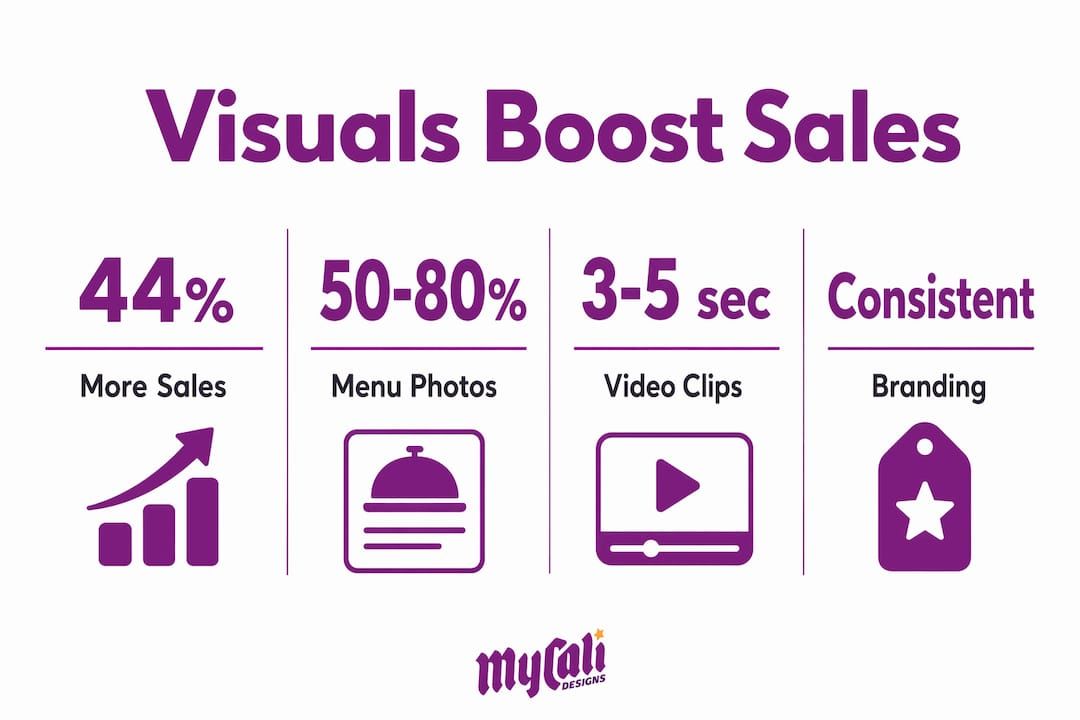
- Menu photos increase orders by an average of 25–30%, with individual items that have photos generating up to 44% more monthly sales compared to text-only listings.
- Items without photos on delivery apps are consistently skipped, even when the dish itself is superior.
- High-quality images on Google Business Profile listings increase direction requests and website clicks.
The impact of images on restaurant sales compounds across every channel. A photo that works on your menu also works on Instagram, your website, and third-party delivery platforms. One good shoot can feed weeks of content.
Pro Tip: Photograph your top 10 best-selling items first. These are your highest-traffic menu entries, and adding photos to them produces the fastest measurable lift in orders.
The importance of visuals in dining extends to perceived quality. A well-lit, styled photo signals that a restaurant cares about detail. Diners transfer that perception directly to the food itself, even before they taste it.
What are the fundamentals of visual branding for restaurants?
Consistent visual branding is not just about looking good. It is about being recognized. Restaurants with consistent visual branding, including photo lighting, color palettes, and typography, achieve brand recognition 3–5 times faster than those with inconsistent visuals. That gap is the difference between a restaurant people remember and one they forget.
Color psychology and appetite
Color choices in restaurant design and marketing are not arbitrary. Neurogastronomy research confirms that color directly shapes consumer behavior and purchasing preferences. The practical breakdown:
- Warm colors (red, orange, yellow): Stimulate appetite and create urgency. These suit fast-casual, burger joints, and pizza brands.
- Cool colors (blue, green, white): Signal calm, cleanliness, and quality. These work for fine dining, health-focused concepts, and farm-to-table restaurants.
- Neutral tones (beige, brown, cream): Communicate warmth and authenticity. Common in coffee shops and artisan bakeries.
Choosing the wrong palette for your restaurant type sends a mixed message. A fine dining brand using aggressive reds and yellows undercuts the premium experience it is trying to sell. You can explore the psychology of colors in marketing to build a palette that matches your brand positioning.
Plating as a marketing tool
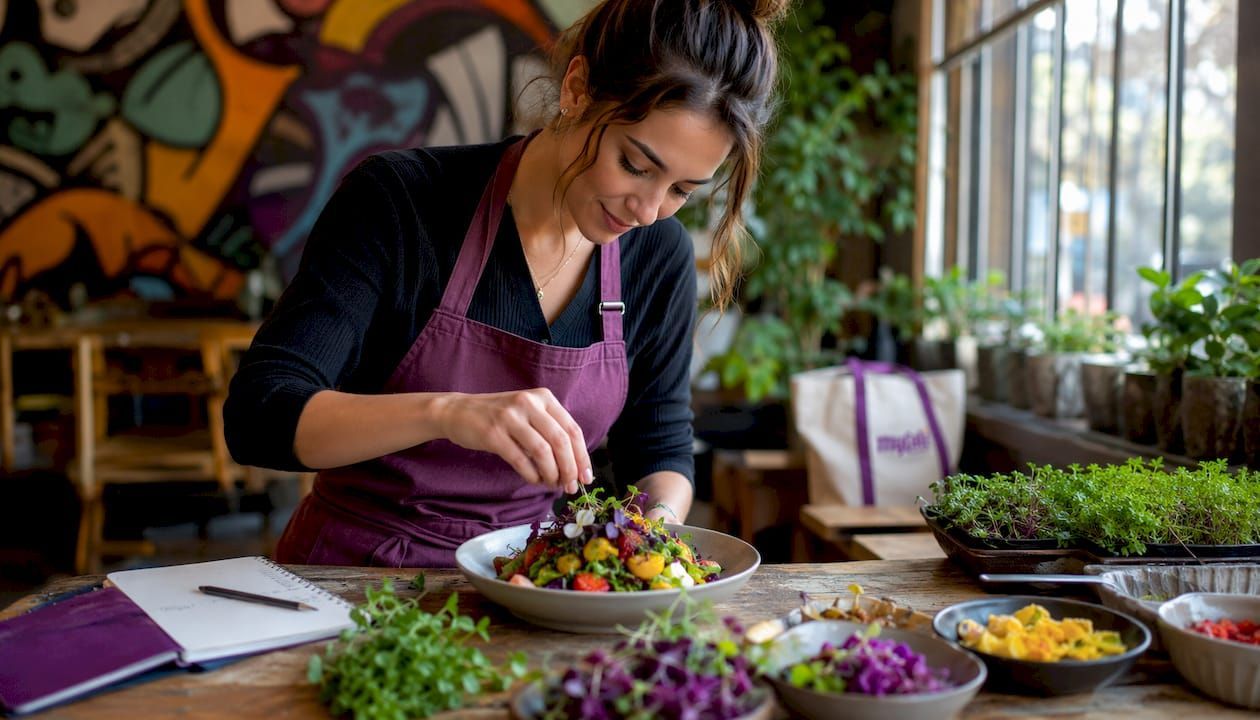
The phrase "we eat with our eyes first" is not just a cliché. It is a documented principle in food science. Artistic plating can make guests willing to pay up to twice as much for the same dish. That is a direct revenue impact from presentation alone. When you photograph a dish with intentional plating, you are not just showing food. You are communicating value, craftsmanship, and price expectation.
Pro Tip: Use odd numbers of elements on the plate and vary heights to create visual interest. These small plating decisions photograph dramatically better and signal quality to the viewer.
Restaurants maintaining a consistent visual identity across menus, social media, and signage build a recognizable and trusted brand faster. Consistency is the multiplier. Every touchpoint that matches reinforces the brand in the diner's memory.
Why are short videos outperforming photos on social media?
Motion content has overtaken static photography as the top-performing format on social platforms. Short multisensory video clips of 3–5 seconds showing moments like cheese pulls or sauce pours consistently outperform polished photos on social media. The reason is simple. Motion triggers a sensory response that a still image cannot replicate.
"Multisensory content that includes authentic process, human presence, and motion creates greater trust and audience engagement than highly polished images. Diners want to feel the experience before they arrive."
Video and reels receive significantly more distribution on Instagram and TikTok than static images. The algorithm rewards motion content with wider reach. That means a 4-second clip of a burger being pressed on a flat-top grill can outperform a $500 professional photo shoot in terms of organic reach.
Here is a practical framework for filming effective restaurant video content:
- Capture the sensory moment. Film the steam rising, the sauce dripping, the crust cracking. These micro-moments trigger appetite and curiosity.
- Include human presence. A chef's hands, a server placing a dish, a customer's reaction. Human elements build trust and authenticity.
- Keep it raw and real. A phone camera in good natural light beats an overproduced clip with no personality. Authenticity outperforms polish on social feeds.
- Plan a content calendar. Batch-film 10–15 clips during one prep session. This gives you two weeks of daily content without disrupting operations.
- Add sound. The sizzle, the crunch, the pour. Sound is half the sensory experience in video content.
Pro Tip: Film during prep, not just plating. Behind-the-scenes content showing ingredient sourcing or sauce-making consistently earns higher engagement than finished-dish shots alone.
For more ideas on using this content effectively, the social media ideas for restaurants guide covers platform-specific strategies that fill tables.
How should visual strategies differ by restaurant type?
Not every restaurant should use the same visual approach. The right strategy depends on your concept, price point, and primary marketing channels. Using the wrong visual strategy for your restaurant type actively hurts your brand.
Here is how visual content for restaurants breaks down by concept:
- Fast-casual and quick service: Use comprehensive photo coverage on menus and delivery apps. Aim for 50–80% photo coverage on your menu. Too many photos dilute impact; too few miss conversion opportunities. Bright, high-contrast images work best.
- Fine dining: Avoid photos on physical menus to preserve the luxury experience. Fine dining restaurants often avoid photos on physical menus but invest heavily in high-quality images for websites and social media. The external photography does the selling before the guest arrives.
- Delivery and ghost kitchens: Every item needs a photo. Diners cannot see, smell, or touch the food. The image is the entire product experience before purchase.
- Casual dining: Balance is key. Feature photos for signature dishes and seasonal specials. Use consistent color grading across all images to build a recognizable feed.
The channel matters as much as the concept. Your website needs high-resolution images that load fast. Your Instagram feed needs a consistent color palette. Your delivery app listing needs clean, appetite-driven close-ups. Each platform has its own visual grammar, and matching that grammar improves performance on every one.
A visual identity checklist helps you audit whether your current assets are consistent and channel-ready. Most restaurants discover gaps they did not know existed.
Key Takeaways
Strong visual content is the most direct lever restaurant owners have for increasing orders, building brand recognition, and converting browsers into paying customers.
| Point | Details |
|---|---|
| Photos drive measurable sales | Menu items with photos generate up to 44% more monthly sales than text-only listings. |
| Consistency accelerates recognition | Consistent visual branding builds brand recognition 3–5 times faster across all channels. |
| Short videos outperform photos | 3–5 second sensory clips earn more reach on Instagram and TikTok than static images. |
| Strategy must match restaurant type | Fine dining avoids menu photos; fast-casual and delivery concepts need 50–80% photo coverage. |
| Color psychology shapes perception | Warm colors drive appetite for fast-casual; cool colors signal quality for fine dining. |
What I have learned about visuals after working with restaurant brands
The biggest mistake I see restaurant owners make is treating photography as a one-time expense rather than an ongoing asset. They invest in a shoot at launch, then spend two years posting the same 12 images. The brand looks stale, and the algorithm buries them.
The second mistake is chasing polish over authenticity. I have seen restaurants spend thousands on a glossy video production that performs worse than a 6-second phone clip of a chef cracking an egg. Diners are not looking for a commercial. They are looking for a reason to trust you.
What actually works is a system. You need a clear visual identity, a consistent color palette, and a repeatable process for capturing content during normal operations. When those three things are in place, content creation stops feeling like a burden and starts feeling like a natural extension of how you run your kitchen.
The restaurants that win on social media are not the ones with the biggest budgets. They are the ones that show up consistently with content that feels real. A great logo and a strong brand foundation make every piece of content work harder. Without that foundation, even great photography feels disconnected.
If you are serious about how visuals enhance restaurant branding, start with your identity. Everything else builds from there.
— Cesar
How Mycalidesigns helps restaurants build a visual brand that works
A restaurant's visual identity is the first thing a potential customer judges, and it shapes every marketing decision that follows.
Mycalidesigns works with restaurant owners to build the visual foundation that makes marketing easier and more effective. From logo and branding design that communicates your concept clearly, to website and digital marketing services that put your best visuals in front of the right audience, we handle the design side so you can focus on running your restaurant. Every service is built to help you look professional, build trust, and attract more customers through consistent, well-crafted visual content.
FAQ
How much do photos increase restaurant sales?
Menu items with photos generate up to 44% more monthly sales compared to text-only listings. Overall, photo menus increase orders by an average of 25–30%.
What percentage of a menu should have photos?
The optimal range is 50–80% photo coverage for most restaurant types. Too many photos reduce impact; too few miss conversion opportunities.
Should fine dining restaurants use menu photos?
Fine dining restaurants typically avoid photos on physical menus to protect their luxury positioning. They invest instead in high-quality photography for websites and social media to attract guests before they arrive.
Why do short videos perform better than photos on social media?
Instagram and TikTok algorithms distribute video and reels more widely than static images. A 3–5 second sensory clip showing a cheese pull or sauce pour triggers appetite and earns more organic reach than a polished photo.
How does consistent visual branding help a restaurant?
Consistent visual branding across menus, social media, and signage builds brand recognition 3–5 times faster than inconsistent visuals. Diners recognize and trust brands that look the same everywhere they appear.
Recommended
Recent Posts