



What Is a Marketing Funnel? A 2026 Business Guide
What Is a Marketing Funnel? A 2026 Business Guide

TL;DR:
- A marketing funnel is a strategic model that guides customers from awareness to advocacy, with audiences narrowing at each stage. Properly customized funnels improve conversion and retention by matching tactics and messaging to the audience's needs, stages, and behavior. Misconceptions include believing one funnel suits all businesses and viewing funnels as linear, which hinders effective marketing strategies.
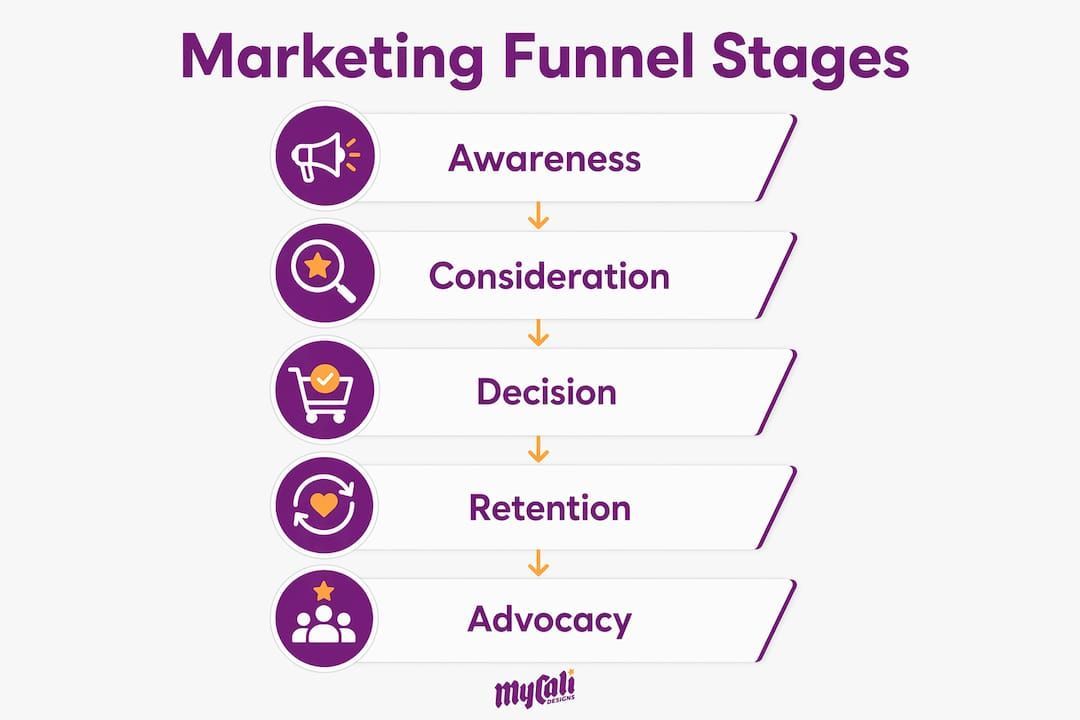
A marketing funnel is defined as a strategic model that maps the customer journey from first discovering a brand to making a purchase and becoming a loyal advocate. The funnel shape is intentional: audiences narrow at each stage as prospects self-select based on interest and intent. Most funnels follow three core phases, TOFU (top of funnel), MOFU (middle of funnel), and BOFU (bottom of funnel), with modern frameworks extending into retention and advocacy. Understanding this model is the foundation of every effective customer acquisition and conversion strategy. If you are a business owner or marketing professional asking what is a marketing funnel, this guide gives you the full picture.
What is a marketing funnel and why does it matter?
A marketing funnel maps the customer journey from brand awareness through purchase and advocacy, with audiences progressively narrowing at each stage. The narrowing is not a failure. It reflects natural self-selection: not every person who sees your ad will buy, and that is expected. The funnel gives you a framework to measure where prospects drop off and where to focus your effort.
The marketing funnel definition traces back to the AIDA model (Awareness, Interest, Desire, Action), first described in the late 1800s. Modern versions extend that model to include post-purchase stages like retention and advocacy. The core logic remains the same: guide people from "I've never heard of you" to "I recommend you to everyone I know."
The importance of marketing funnels goes beyond theory. Without a funnel, marketing spend is scattered. With one, every campaign has a defined stage, a defined audience, and a defined goal. That clarity is what separates businesses that grow predictably from those that rely on luck.
What are the key stages of a marketing funnel?
Each funnel stage has a distinct job, a distinct audience mindset, and a distinct set of tactics. Mixing them up is one of the most common and costly mistakes in marketing.

TOFU: top of funnel (awareness)
The top of funnel captures attention from people who do not yet know your brand exists. The goal is reach, not conversion. Channels that perform here include SEO content, social media, paid display ads, and podcast sponsorships. The primary metric is impressions and unique visitors, not leads.
MOFU: middle of funnel (consideration)
The middle of funnel nurtures prospects who know you exist but have not committed. They are comparing options, reading reviews, and evaluating fit. Emotional credibility and authentic social proof drive higher engagement here than feature lists do. Email sequences, webinars, case studies, and comparison guides are the workhorses of this stage.
BOFU: bottom of funnel (decision)
The bottom of funnel converts. Prospects here are ready to buy but need a final push. Free trials, demos, limited-time offers, and direct sales conversations address remaining objections. The metric that matters is conversion rate, not traffic volume.
Retention and advocacy
Modern funnels do not stop at the sale. Retention tactics like onboarding sequences, loyalty programs, and community access reduce churn. Advocacy tactics turn satisfied customers into referral sources. These post-purchase stages often deliver the highest return on investment because the cost of converting an existing customer is far lower than acquiring a new one.
- TOFU channels: SEO, social media, paid ads, PR
- MOFU channels: Email nurture, webinars, case studies, retargeting
- BOFU channels: Free trials, demos, sales calls, discount offers
- Retention channels: Onboarding emails, loyalty programs, customer communities
- Advocacy channels: Referral programs, review requests, user-generated content campaigns
Pro Tip: Map one primary metric to each funnel stage before you build any campaign. Awareness campaigns measured by conversion rate will always look like failures, even when they are working perfectly.
How do real-world marketing funnels vary across industries?
Explaining marketing funnels in the abstract only goes so far. Real-world examples show how the same framework adapts to wildly different contexts.
| Funnel Type | Primary Channel | Core Mechanic | Example Outcome |
|---|---|---|---|
| Content-Led Inbound | SEO and LinkedIn | Organic content builds trust over time | Qualified leads from search traffic |
| Paid Search Pain-to-Solution | Google Ads | Ad targets a specific problem, landing page solves it | High-intent conversions |
| Product-Led Growth (PLG) | In-product experience | Free tier drives adoption, upgrades follow | Millions of signups at low cost |
| Loyalty and Advocacy | Email and social | Personalized data triggers sharing behavior | Organic reach and referrals |
The Content-Led Inbound funnel works well for B2B companies with long buying cycles. A content marketing process built around SEO and LinkedIn positions your brand as the expert answer before a prospect even knows they need you. The payoff is slow but the lead quality is high.
The Paid Search Pain-to-Solution funnel is the opposite. It targets people already searching for a fix. The ad matches their exact problem, the landing page delivers the solution, and the call to action removes friction. Speed is the advantage here.
Product-Led Growth funnels let the product do the selling. One brand generated 1.3 million new app signups through a low-friction contest, proving that removing barriers to entry can produce scale that paid advertising rarely matches. The key is making the first experience so valuable that upgrading feels obvious.
Spotify Wrapped is the most cited advocacy funnel example for good reason. Spotify Wrapped engages over 156 million users annually and generates more than 60 million social media shares. The mechanic is simple: personalized data becomes shareable content, and every share is unpaid advertising. That is a loyalty campaign functioning as a top-of-funnel engine.
- Low-friction entry points (free tiers, contests, free tools) dramatically increase TOFU volume.
- Personalized data creates emotional connection, which drives advocacy without a paid budget.
- B2B funnels typically require more MOFU touchpoints than B2C funnels before conversion.
Pro Tip: Before choosing a funnel type, identify your buyer's primary objection at the decision stage. Build your entire funnel backward from that objection. Every stage should reduce it.
What are the biggest misconceptions about marketing funnels?
The most damaging misconception is that one funnel design works for every business. Funnels must be customized for product type, audience, and buying cycle length to perform. A SaaS company with a 14-day free trial needs a completely different funnel architecture than a professional services firm with a six-month sales cycle.
"The funnel is not a rigid pipeline. It is a living model that should flex with your customer's actual behavior, not the behavior you wish they had. Businesses that treat it as a checklist miss the point entirely."
The second misconception is that marketing and sales own separate, non-overlapping funnels. Marketing owns the top and middle funnel, generating marketing-qualified leads (MQLs), while sales owns the bottom, converting MQLs to sales-qualified leads (SQLs) and then customers. That handoff point is where most revenue leaks. In product-led growth organizations, the distinction blurs further because the product itself converts users without a sales conversation.
The third misconception is that funnels are linear. Modern funnels are non-linear. Prospects jump stages, revisit content, and engage across multiple channels before converting. A prospect might read your blog post (TOFU), attend a webinar (MOFU), go cold for three months, then convert after seeing a retargeting ad (BOFU). A rigid linear model misses that behavior entirely.
- ✗ One funnel fits all businesses
- ✗ Marketing and sales funnels are completely separate
- ✗ Prospects move through stages in a straight line
- ✓ Funnels should match your specific product, audience, and cycle
- ✓ Marketing and sales share ownership at the MQL-to-SQL handoff
- ✓ Multi-touchpoint strategies account for non-linear buyer behavior
Authentic social proof matters most in the consideration phase. Testimonials, case studies, and user-generated content reduce perceived risk at the exact moment a prospect is deciding whether to trust you. Generic five-star ratings rarely move the needle. Specific, detailed stories from real customers do.
How do you use a funnel to increase conversion, retention, and advocacy?
Building a funnel is straightforward. Making it perform takes deliberate optimization at every stage.
-
Define your funnel stages before creating content. Map TOFU, MOFU, and BOFU to your specific buyer journey. Identify the questions your audience asks at each stage and create content that answers them directly.
-
Deploy lead magnets at the top of funnel. Lead magnets that provide immediate value convert top-of-funnel visitors into qualified leads. A free template, a diagnostic tool, or a short course works better than a generic newsletter signup. The exchange must feel worth it to the prospect.
-
Nurture with personalized sequences. Generic email blasts underperform. Segment your list by funnel stage and send content that matches where each prospect is in their decision process. A prospect who downloaded a beginner's guide needs different content than one who attended a product demo.
-
Address objections at the bottom of funnel. Identify the top three reasons prospects do not convert and build content or conversations that resolve each one. A FAQ page, a comparison guide, or a direct sales call can each serve this role depending on your business model.
-
Automate post-purchase advocacy. Automated, data-driven triggers in advocacy funnels move customers from one-time buyers to growth engines with minimal manual effort. A well-timed referral request sent 30 days after a positive customer experience outperforms any cold outreach campaign.
-
Track stage-specific KPIs. Measure click-through rate at TOFU, email open and engagement rate at MOFU, and conversion rate at BOFU. Retention funnels track churn rate and net promoter score. Each metric tells you exactly where the funnel needs attention.
Pro Tip: Use CRM data to identify which content pieces correlate with your highest-value customers. Then put more budget behind those pieces at the top of funnel. You are not just generating leads. You are filtering for the right ones.
Multi-channel funnels that combine paid, organic, and email touchpoints consistently outperform single-channel approaches. The reason is simple: prospects encounter your brand in different contexts and at different times. Each touchpoint builds familiarity, and familiarity builds trust. Design plays a direct role in how well each touchpoint converts, from the clarity of a landing page to the credibility of a brand's visual identity.
Key Takeaways
A marketing funnel works because it gives every marketing activity a defined stage, a defined audience, and a measurable goal, turning scattered effort into a system that compounds over time.
| Point | Details |
|---|---|
| Funnel stages have distinct jobs | TOFU builds awareness, MOFU nurtures trust, BOFU converts, and post-purchase stages drive retention and advocacy. |
| Customization is non-negotiable | Funnel architecture must match your product type, audience, and buying cycle to perform. |
| Modern funnels are non-linear | Prospects jump stages and revisit content, requiring multi-touchpoint strategies rather than rigid linear paths. |
| Lead magnets capture qualified leads | Immediate, tangible value exchanges at TOFU convert visitors into leads and reduce bounce rates. |
| Advocacy funnels scale without manual effort | Automated post-purchase triggers using CRM data turn satisfied customers into referral sources. |
Why most funnel advice misses the point
Most funnel guides treat the model as a fixed structure. My experience working with business owners across industries tells a different story. The funnel is a diagnostic tool, not a prescription. When a business comes to us saying their ads are not converting, the problem is almost never the ad. It is a mismatch between the stage the ad targets and the stage the audience is actually in.
The businesses I see succeed with funnels share one habit: they obsess over the handoff points, not the stages themselves. The gap between TOFU and MOFU, where a prospect goes from aware to interested, is where most leads are lost. That gap is usually a content problem or a trust problem. Fixing it with better storytelling, brand storytelling that connects emotionally rather than just informing, consistently outperforms adding more ad spend.
The emerging trend worth watching is omnichannel advocacy. Brands that build communities around their product, not just email lists, are creating funnels that self-perpetuate. Customers recruit other customers. That is the most efficient funnel architecture that exists, and it starts with a product and brand experience worth talking about.
— Cesar
How Mycalidesigns helps you build a funnel that converts
A funnel is only as strong as the brand behind it. If your visual identity does not build trust at first glance, your TOFU efforts will always underperform, no matter how much you spend on ads or content.
Mycalidesigns works with business owners and marketing professionals to build the brand foundation that makes every funnel stage more effective. From logo design and branding that builds immediate credibility to custom websites designed around conversion paths, every service connects directly to funnel performance. We also offer digital marketing services that target specific funnel stages with the right message at the right time. If your funnel is leaking, the fix often starts with how your brand looks and feels to a first-time visitor.
FAQ
What is a marketing funnel in simple terms?
A marketing funnel is a model that tracks how people move from first hearing about your business to becoming paying customers and advocates. It narrows at each stage because not everyone who discovers your brand will buy.
What are the main stages of a marketing funnel?
The three core stages are TOFU (awareness), MOFU (consideration), and BOFU (decision). Modern funnels add retention and advocacy as post-purchase stages that drive long-term growth.
How is a marketing funnel different from a sales funnel?
Marketing owns the top and middle funnel, generating qualified leads, while sales owns the bottom, converting those leads into customers. In product-led growth companies, the product itself handles much of the conversion without a dedicated sales team.
How do you create a marketing funnel for a small business?
Start by defining your buyer's journey and mapping one primary goal to each funnel stage. Build content that answers stage-specific questions, use a lead magnet to capture contact information, and set up an email sequence to nurture prospects toward a purchase decision.
Why do most marketing funnels fail?
Most funnels fail because they apply a generic structure to a specific business problem. Funnels must be customized for product type, audience, and buying cycle. A mismatch between funnel stage and audience intent is the most common cause of poor conversion rates.
Recommended
Recent Posts