




Benefits of Brand Guidelines for SMB Growth
Benefits of Brand Guidelines for SMB Growth

TL;DR:
- Brand guidelines define how a business looks and communicates across all touchpoints, enhancing recognition, trust, and revenue. They streamline marketing workflows, reduce creative confusion, and ensure consistent messaging and visuals across channels. Regularly updating and actively enforcing guidelines helps SMBs maximize brand effectiveness and support sustainable growth.
Brand guidelines are the documented standards that define how your business looks, sounds, and communicates across every touchpoint. The benefits of brand guidelines go far beyond aesthetics. They drive revenue, build customer trust, and give your team a shared rulebook that removes guesswork from every creative decision. Brand consistency is not a design luxury. For small and medium-sized businesses competing against larger players, it is one of the most cost-effective growth tools available.
What are the primary benefits of brand guidelines?
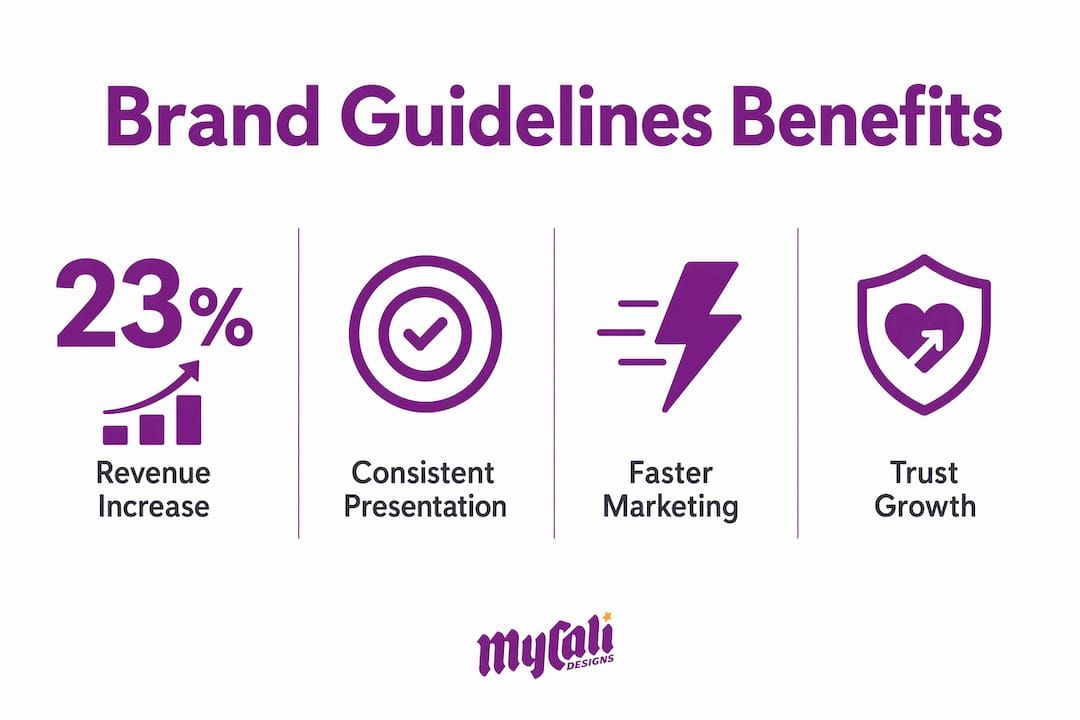
Brand guidelines deliver measurable business results, not just a polished look. Brand consistency can increase revenue by up to 23%. That number reflects what happens when customers recognize you instantly, trust your professionalism, and feel confident buying from you again.
Here is what consistent brand presentation does for your business:
- Builds recognition fast. A single consistent color palette can boost brand recognition by up to 80%. Recognition is the first step toward preference.
- Accelerates trust. 81% of consumers say they need to trust a brand before making a purchase. Consistent branding builds that trust faster than any ad campaign.
- Increases customer lifetime value. Loyal customers who feel an emotional connection to your brand spend 67% more than new buyers. Guidelines keep that emotional connection alive across every channel.
- Reduces creative confusion. When your team has clear rules, they stop debating fonts, colors, and tone in every meeting. Decisions get made faster.
- Protects your investment. Every dollar you spend on marketing works harder when your visuals and messaging are consistent. Fragmented branding dilutes that spend.
Pro Tip: Start with your three most visible touchpoints: your website, social media profiles, and email signature. Align those first, and the rest of your brand presence will follow more naturally.
The importance of brand guidelines becomes clearest when you look at what happens without them. Teams produce off-brand materials. Freelancers guess at your logo colors. New hires spend weeks figuring out your voice. Guidelines prevent all of that.
How do brand guidelines improve marketing workflows?
Brand guidelines function as a single source of truth for everyone who touches your brand. Clear guidelines help onboard new hires and external partners faster, cutting revision cycles and creative back-and-forth. That operational efficiency compounds over time.

Think of it this way: without guidelines, every new campaign starts from scratch. With them, your team picks up where the last one left off. The brand voice is documented. The approved logo files are ready. The color codes are listed. Nobody has to ask.
The advantages of brand style guides extend into day-to-day collaboration:
- Fewer revision rounds. Designers, copywriters, and marketers work from the same rules, so first drafts land closer to approval.
- Faster partner onboarding. Agencies, freelancers, and vendors get up to speed in hours instead of days.
- Consistent output across channels. Your Instagram post, your email newsletter, and your sales deck all feel like they came from the same company.
- Reduced approval bottlenecks. When the rules are clear, managers spend less time correcting and more time moving forward.
Centralized style guides give all teams fast, reliable answers and reduce the ambiguity that wastes effort. The difference between a living guideline hub and a static PDF is significant. A PDF gets saved, forgotten, and ignored. A living hub hosted on a platform like Brandy or Frontify stays current and accessible.
Pro Tip: Embed your brand guidelines directly into the tools your team already uses. If your team works in Notion, Google Docs, or Slack, put a link to your guidelines there. Accessibility drives adoption.
What are the essential components of effective brand guidelines?
Strong brand guidelines cover both visual identity and verbal identity. Visual without verbal leaves your design polished but your messaging inconsistent. Verbal without visual leaves your copy sharp but your look unprofessional.
The following table breaks down the core components and what each one accomplishes:
| Component | Purpose |
|---|---|
| Logo usage rules | Defines approved versions, sizing, spacing, and what not to do with your logo |
| Color palette | Specifies exact hex, RGB, and CMYK codes so colors stay consistent across print and digital |
| Typography | Sets primary and secondary fonts, hierarchy rules, and size guidelines |
| Imagery style | Describes the look and feel of photos, illustrations, and icons your brand uses |
| Tone of voice | Documents how your brand speaks: formal or casual, direct or warm, technical or plain |
| Messaging framework | Captures your tagline, value proposition, and key messages for consistent copy |
| Usage examples | Shows correct and incorrect applications so teams know exactly what to do |
Digital and print applications have different requirements. Your logo needs vector files for print and optimized PNG files for web. Your color palette needs both CMYK values for print and hex codes for screens. Effective guidelines address both without making the document overwhelming.
The verbal identity section is where many SMBs fall short. Documenting your tone of voice is just as important as documenting your logo. Tools like Grammarly can help enforce writing standards once your tone is defined. Adobe Express offers templates that align with visual guidelines for teams producing digital content quickly.
How to implement brand guidelines that actually get used
The most successful brands treat their guidelines as a living system integrated into workflows, not a document filed away after launch. Here is a practical process for getting yours off the ground and keeping them relevant.
- Audit your current assets. Collect every logo file, color code, font, and template your team currently uses. Identify what is consistent and what is not. This audit becomes the foundation of your guidelines.
- Document what already works. Start with existing rules rather than inventing new ones. Start small and iterate from existing assets rather than overwhelming your team with a massive manual.
- Choose an accessible hosting platform. Google Docs works for small teams just getting started. Platforms like Brandy or Frontify work better for growing teams that need version control and media libraries.
- Write for the people who will use it. Your guidelines should be clear to a new freelancer who has never worked with you before. Use plain language, show examples, and include both correct and incorrect usage.
- Train your team at launch. Walk through the guidelines in a team meeting. Answer questions. Make it clear that this document is the authority on brand decisions.
- Schedule quarterly reviews. Your brand evolves. Your guidelines should too. Set a calendar reminder every quarter to check whether anything needs updating.
Integrating guidelines into your content marketing process makes them part of how work gets done, not an afterthought. The goal is for your team to reach for the guidelines automatically, the way they reach for a spell-checker.
Pro Tip: Assign one person as the brand guidelines owner. This person approves updates, answers questions, and keeps the document current. Without ownership, guidelines drift.
What pitfalls undermine the benefits of brand guidelines?
Even well-designed guidelines fail when they are not adopted. The most common mistakes are avoidable with a little foresight.
- Creating a "dead" PDF. A PDF that lives in a shared drive gets ignored within weeks. Guidelines must be living, accessible hubs integrated into creative workflows to stay effective.
- Writing rules that are too vague. "Use a professional tone" means nothing without examples. Show what professional looks like in your brand's voice, and show what it does not look like.
- Skipping enforcement. Guidelines only work if someone checks that they are being followed. Build a review step into your creative approval process.
- Never updating the document. An outdated guideline is worse than no guideline. Teams stop trusting it and start improvising. Schedule updates and communicate changes clearly.
- Making it too complex. A 60-page brand bible intimidates more than it guides. For most SMBs, a focused 10-to-15-page document covers everything needed to stay consistent.
Brand guidelines help fix subjective opinions into objective rules, which speeds up decision-making and reduces conflict. When the rules are written down, "I don't like that blue" becomes "that blue is not in our approved palette." The conversation shifts from opinion to standard.
Key takeaways
Strong brand guidelines are the single most cost-effective tool an SMB can use to build recognition, earn trust, and protect every dollar spent on marketing.
| Point | Details |
|---|---|
| Revenue impact | Brand consistency can increase revenue by up to 23%, making guidelines a direct growth tool. |
| Recognition boost | A consistent color palette alone can increase brand recognition by up to 80%. |
| Operational efficiency | Clear guidelines reduce revision cycles and speed up onboarding for new hires and partners. |
| Living documents win | Guidelines hosted on accessible platforms get used; static PDFs get ignored. |
| Start small | Audit existing assets first and build guidelines from what already works before adding new rules. |
Why smbs get the most out of brand guidelines
From working with small and medium-sized businesses at Mycalidesigns, I have seen one pattern repeat itself: the businesses that grow fastest are not always the ones with the biggest budgets. They are the ones with the clearest brand identity.
What I find most telling is how often SMB owners underestimate what a simple, well-maintained style guide does for their team's confidence. When your designer, your social media manager, and your sales rep all know exactly what the brand looks like and sounds like, they stop second-guessing themselves. That confidence shows up in the work.
The mistake I see most often is treating brand guidelines as a one-time deliverable. A business invests in a logo and a color palette, documents it once, and never touches it again. Two years later, there are three versions of the logo floating around and nobody agrees on the font. Guidelines need an owner and a review schedule, not just a launch.
My honest recommendation: keep your first version simple. Cover your logo, colors, typography, and tone of voice. Get your team using it. Then build from there. A focused, used guideline beats a comprehensive, ignored one every time. Check your brand readiness before you invest in a full system, and you will get far more value from the process.
— Cesar
Build a brand that works as hard as you do
At Mycalidesigns, we help SMBs create brand identities that are built to last and easy to maintain. Whether you are starting from scratch or cleaning up years of inconsistent assets, we build the visual and verbal foundation your business needs to grow with confidence.
Our brand identity services cover everything from custom logo design to full brand style guides that your team will actually use. We also offer custom logo design for businesses that need a professional mark to anchor their brand system. Every project is built around your business goals, your audience, and the consistency that turns browsers into buyers. If you are ready to stop guessing and start growing, we are ready to help.
FAQ
What are brand guidelines, exactly?
Brand guidelines are a documented set of rules that define how your brand looks and communicates across all channels. They cover visual elements like logos, colors, and typography, as well as verbal elements like tone of voice and messaging.
How do brand guidelines increase revenue?
Consistent brand presentation can boost profits by over 20% and increase revenue by up to 23%, according to data from Lucidpress and Marq. Consistency builds recognition and trust, which directly drives purchase decisions.
Do small businesses really need brand guidelines?
Yes. SMBs benefit from guidelines more than large companies in some ways because they have fewer resources to waste on rework and inconsistency. A simple, focused style guide keeps a small team aligned without requiring a dedicated brand manager.
What should brand guidelines include?
Effective guidelines cover logo usage, color palette with exact codes, typography rules, imagery style, tone of voice, and key messaging. Usage examples showing correct and incorrect applications make the document far more practical for everyday use.
How often should brand guidelines be updated?
A quarterly review is a practical standard for most SMBs. Update your guidelines whenever your brand evolves, when new channels are added, or when your team consistently asks questions the current document does not answer.
Recommended
Recent Posts