




The Role of Social Media in Business Growth in 2026
The Role of Social Media in Business Growth in 2026
TL;DR:
- Social media now functions as a vital channel for brand visibility, customer trust, lead generation, and market intelligence by 2026. Building authentic, consistent content aligned with business goals fosters trust, engagement, and measurable results. Effective strategies adapt to each growth stage while balancing AI tools with genuine human judgment to sustain long-term loyalty.
Most business owners know they should be on social media. Far fewer understand what it can actually do for them. The role of social media has shifted well beyond posting product photos and hoping for likes. In 2026, it functions as a direct channel for brand visibility, customer trust, lead generation, and real-time market intelligence. If you are running a business or managing a marketing plan, understanding this shift is not optional. It determines whether your social presence builds something real or simply adds noise to an already crowded feed.
Key takeaways
| Point | Details |
|---|---|
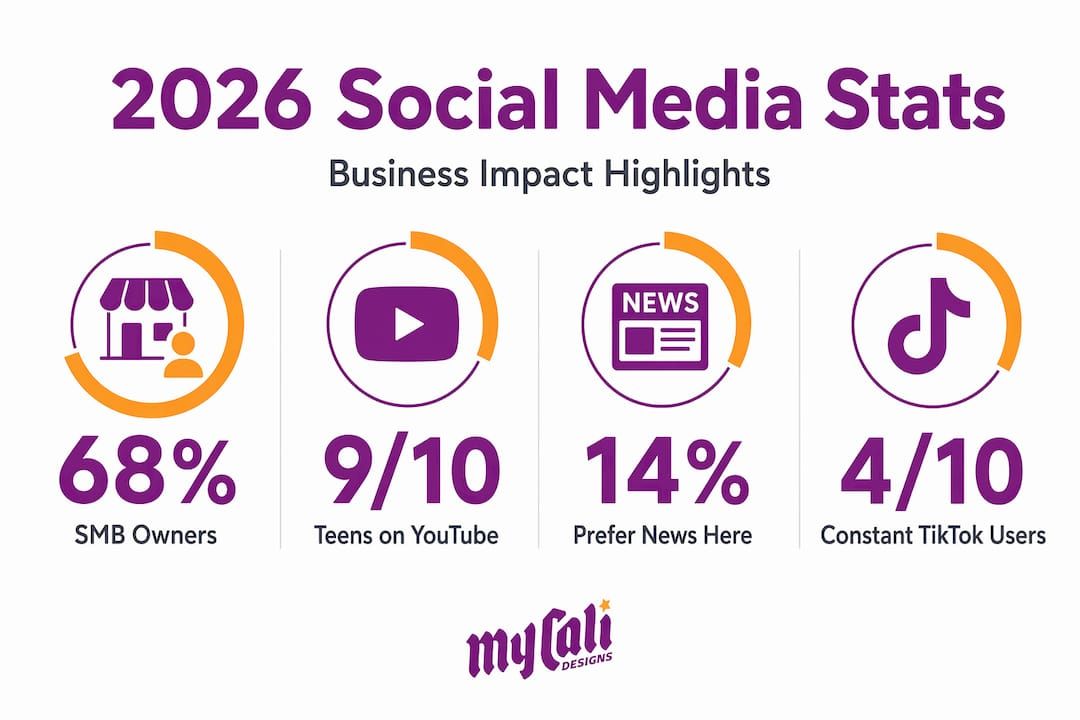
| Social media drives business results | 68% of SMB owners rank social media as their top marketing channel in 2026, above email and traditional advertising. |
| Lifecycle strategy matters | Social media's role shifts from community building to trust development to conversion depending on where your business is in its growth journey. |
| Authenticity protects your brand | AI-generated content can erode trust when not disclosed properly. Transparency is a non-negotiable part of your social media strategy. |
| Tie activity to measurable outcomes | Social media only earns its place in your budget when connected to concrete results like leads, reputation, and customer retention. |
| Ethical engagement builds loyalty | Designing social media experiences that respect your audience creates stronger, longer-lasting customer relationships. |
The role of social media in brand visibility and engagement
Think about how often you or someone on your team checks a social platform before making a purchase decision, looking up a local business, or researching a vendor. That behavior reflects what the importance of social media has become at scale. It is a daily touchpoint, not a weekly marketing task.

The numbers back this up. YouTube reaches roughly 9-in-10 U.S. teens, with 4 in 10 online almost constantly across TikTok, YouTube, Instagram, and Snapchat. These are not just teenagers browsing for entertainment. They are tomorrow's buyers, employees, and decision-makers, being shaped right now by which brands show up consistently and which ones do not.
For businesses, consistent social media presence creates what marketers call passive brand recognition. Your audience does not need to be actively searching for you. Repeated, relevant exposure across their feeds means your brand becomes familiar before the conversation about buying even starts. That familiarity is the foundation of trust.
Here is what brand visibility through social media actually involves:
- Platform presence: Having active, well-maintained profiles on the platforms where your customers spend time
- Content frequency: Posting with enough regularity that your brand stays in your audience's awareness without overwhelming them
- Community engagement: Responding to comments, messages, and mentions to signal that a real business with real people is behind the account
- Visual consistency: Using consistent colors, fonts, and tone across every post so your brand is recognizable at a glance
Social media and community building go together because the platform is designed for interaction. Businesses that treat it as a broadcast channel miss the engagement layer that actually drives loyalty.
Connecting social media activity to real business outcomes
There is a version of social media marketing that looks productive but delivers nothing. Scheduling posts, hitting publish, checking likes. If that cycle never connects back to a business objective, you are spending time without generating returns.
The social media's role in marketing is most powerful when it feeds concrete results. That means thinking about your social activity in terms of what it should produce:
- Lead generation: Social platforms support lead capture through direct messaging, link-in-bio strategies, paid ads, and gated content like downloadable guides.
- Reputation management: When customers praise or criticize your business publicly, your response on social media becomes part of your brand record. Managing your online reputation through active social monitoring protects what you have built.
- Social proof: User-generated content, reviews, and customer stories shared on social platforms function as modern word-of-mouth. They tell potential customers that real people trust you.
- Market research: Comments, poll responses, and direct messages give you unfiltered feedback on what your audience wants, fears, and values. No focus group required.
- Customer service: Many customers now expect a brand to respond to complaints or questions through social channels faster than through email.
Connecting social activity to ROI and measurable business metrics is what separates a social media strategy from a social media habit.
Pro Tip: Set one primary objective for each piece of content you publish. A post designed to generate leads needs a different structure than one designed to build brand awareness. Mixing goals in a single post usually accomplishes neither.
The impact of social media on your bottom line only becomes visible when you are measuring the right things. Track link clicks, message inquiries, form submissions, and direct sales attributed to social traffic. These numbers tell you what is working and where to focus.
Authenticity, AI, and the trust problem in 2026
AI content tools have made it faster and cheaper to produce social media posts, captions, and even short-form videos. That sounds like a win for resource-limited marketing teams, and in some ways it is. But the risk is real.
Research published in Scientific Reports found that AI in social media can broaden participation and inclusivity but also risks saturating discourse with generic, inauthentic content that undermines trust. When every brand in your category sounds the same because they are all running similar AI prompts, the social media influence that actually converts customers collapses.
Consider these risks when building your content approach:
- Generic tone: AI-generated posts often flatten the specific voice that makes your brand recognizable
- Disclosure gaps: Meta's AI Ads Manager already requires "AI Info" disclosure on AI-assisted ads. Failing to disclose can lead to policy violations and reputational damage
- Engagement without connection: A polished post that generates clicks but no real response has not built anything lasting
- Ethical design concerns: Addictive platform design features have been linked to mental health concerns, which means designing your content around honest value creation is not just ethical. It is the smarter long-term strategy.
"Social media engagement should be treated as ethically designed customer experiences, not just attention-hacking or addictive media."
The brands winning on social in 2026 are not the ones posting the most. They are the ones whose content feels like it came from a real perspective, built around genuine customer value. AI can assist your workflow, but the human judgment behind what you say and how you say it cannot be outsourced.
Adapting social media strategy across your business lifecycle
How social media affects society and how it affects your business are two different conversations. From a business strategy standpoint, the role of social media in business changes significantly depending on where you are in your growth cycle.
| Business Stage | Primary Social Media Goal | Key Tactics |
|---|---|---|
| Startup | Proof of demand and community building | Organic content, founder storytelling, audience polling |
| Growth | Trust building and brand differentiation | Testimonials, behind-the-scenes content, partnership posts |
| Scaling | Conversion and customer acquisition | Paid social ads, retargeting, lead magnets |
| Established | Retention and reputation management | Community engagement, customer spotlights, loyalty campaigns |
The mistake many businesses make is running social media as a standalone activity disconnected from their broader marketing and sales goals. A startup using conversion-focused paid ad campaigns before it has built any audience trust is wasting its budget. An established brand that never graduated from awareness content to direct response is leaving revenue on the table.
Pro Tip: Audit your current social media content against your business stage. If your posts are all brand awareness but your pipeline needs leads, realign your content mix before adjusting your budget.
Integrating social media with your other channels multiplies results. Your email list can grow from social-driven opt-ins. Your SEO content can get distributed through social to build backlinks and direct traffic. A well-executed social campaign can drive foot traffic to a physical location. Optimizing your social media workflow so that all of these touchpoints work together is what separates a marketing system from a collection of separate tasks.
Trends shaping social media's business role going forward
The benefits of social media engagement are evolving as platforms change and new tools reshape how brands connect with audiences. Here is where the landscape is moving in 2026 and what it means for your strategy.
| Trend | What It Means for Businesses |
|---|---|
| Always-on youth engagement | Younger consumers expect brands to be consistently present and responsive, not just active during campaigns |
| AI chatbot integration | Brands are embedding AI assistants into social messaging to handle first-contact customer service at scale |
| Transparency expectations | Audiences increasingly expect clarity on sponsored content, AI use, and data practices |
| Platform algorithm shifts | Reach through organic content continues to narrow, making paid distribution and community engagement more critical |
| Social commerce growth | Purchasing directly within social platforms is becoming standard, shortening the path from discovery to transaction |
Notably, only 14% of Americans name social media as their preferred news source, which tells you something important. Your audience is on social platforms, but they are not necessarily in information-seeking mode. Content that entertains, connects, or solves a specific problem performs far better than content that reads like a press release.
The businesses that will use social media most effectively going forward are those that treat it as a living channel. One that requires regular reassessment, real investment in digital branding strategies, and a willingness to adjust based on what the data shows.
My honest take on getting social media right
I have worked with enough businesses to see the same pattern repeat itself. A company invests time and money into social media, builds a decent following, and then wonders why none of it translates into sales. The answer is almost always the same. Social was treated as its own world instead of as part of a larger system.
In my experience, the businesses that get the most from social media are not the ones with the biggest followings. They are the ones that know exactly what they want social to do at each stage of their business, and they build their content to do that specific job. A startup building community needs different content than a scaling brand running acquisition campaigns. When those goals get confused, results disappear.
The other thing I see consistently is the temptation to chase trends without a stable brand foundation underneath. AI tools, new platform features, short-form video formats. All of these are worth exploring. But if your brand identity is unclear, your visual presence is inconsistent, or your messaging changes with every campaign, no trend is going to save you. The brands I have seen use AI-driven strategies effectively are the ones that already had a clear brand voice before the tools arrived. AI amplified what was already working, not the other way around.
Treat social media as a business function with measurable objectives, not a creative outlet. Be willing to look at the numbers, challenge what is not working, and double down on what is. That discipline is what turns a social presence into a growth channel.
— Cesar
Build a social presence that actually works for your business
At Mycalidesigns, we see social media as one part of a larger brand and marketing system that works together. A strong social presence starts with a brand identity your audience recognizes and trusts at a glance.
Whether you are starting from scratch or refining what you already have, we offer the creative and digital services that support real results. From brand identity and logo design that gives your social profiles a professional foundation, to social media and digital marketing services built around your actual business goals. We work with you to create a presence that does more than look good. It attracts, engages, and converts. Let's talk about what that looks like for your business.
FAQ
What is the role of social media in business?
Social media serves as a channel for brand visibility, customer engagement, lead generation, reputation management, and market research. Its role shifts depending on your business stage, from building community awareness to driving direct conversions.
How does social media influence brand trust?
Consistent, authentic content and responsive engagement signal credibility to your audience. Brands that disclose AI use, respond to customer feedback, and maintain a clear brand voice build stronger long-term trust.
What are the measurable benefits of social media engagement?
Measurable outcomes include lead volume from social traffic, customer service response rates, user-generated content volume, website referral traffic, and direct sales attributed to social campaigns.
How should startups use social media differently than established businesses?
Startups should focus on community building and proof of demand through organic storytelling. Established businesses benefit more from conversion-focused tactics like paid ads, retargeting, and loyalty-driven content. Aligning your approach to your business stage prevents wasted budget.
How does AI affect social media marketing in 2026?
AI tools can accelerate content creation and improve customer response times, but they also risk producing generic content that reduces engagement quality. Proper disclosure of AI-assisted content is now required on major platforms, and maintaining a distinct human voice remains critical for brand differentiation.
Recommended
Recent Posts