



The Role of Design in Restaurant Success
The Role of Design in Restaurant Success
TL;DR:
- Restaurant design impacts guest behavior, influences emotional connection, and directly boosts revenue and loyalty.
- Thoughtful spatial layout, aesthetics, and sensory experiences shape perceptions, encourage longer stays, and promote repeat visits.
- Treating design as a strategic asset and making ongoing investments enhance brand perception and overall profitability.
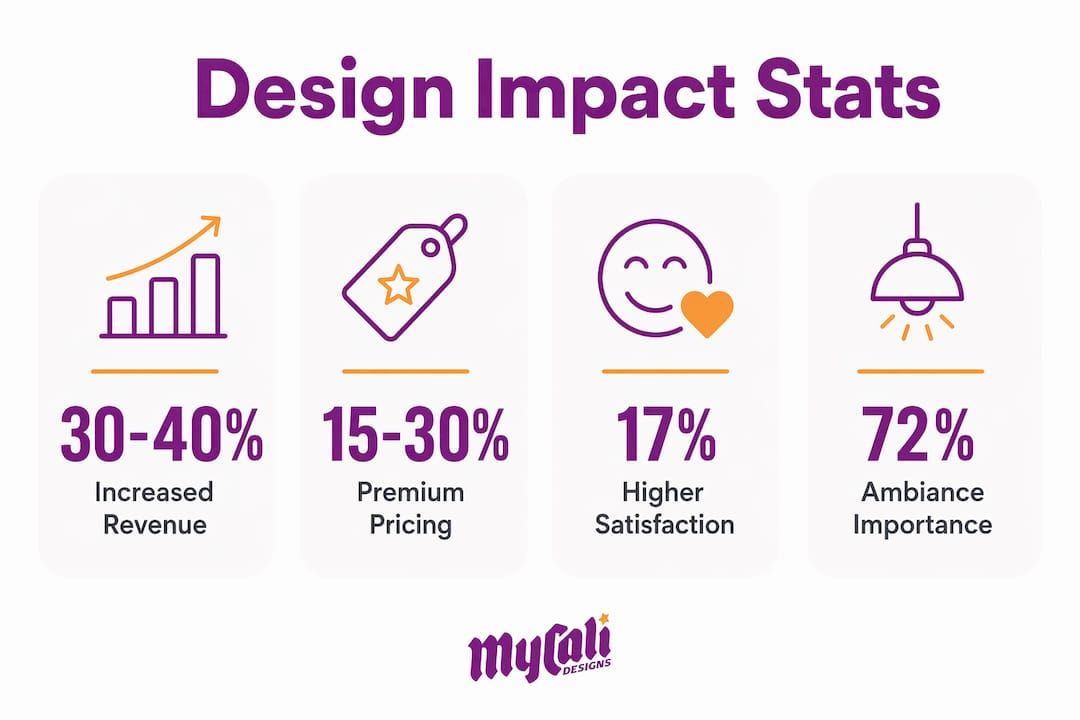
Restaurant design is the silent host that determines whether guests stay, spend, and return. The role of design in restaurant success extends far beyond aesthetics. It shapes customer behavior, signals price point, drives operational efficiency, and builds the emotional connection that turns first-time visitors into regulars. Seventy-two percent of diners say ambiance is as important as food quality. That single number reframes every dollar you spend on your space as a direct investment in revenue.
How does spatial layout impact customer experience?
Spatial layout is the foundation of profitable restaurant design. Every decision about table spacing, traffic flow, and seating arrangement sends a message to your guests before they read a single menu item.
The concept behind this is called proxemics. It is the study of how physical distance affects human comfort and behavior. Table spacing influences customer comfort, perceived price point, and stress levels. Tables packed too close together signal a budget experience and raise anxiety. Generous spacing signals premium dining and slows the pace in a way that encourages add-on orders.
The tradeoff is real. More covers per square foot means more revenue per service. But cramped seating can suppress check averages and kill repeat visits. The most profitable layouts improve server efficiency by up to 30% by creating clear pathways from kitchen to table. That efficiency reduces errors, speeds up service, and keeps guests happier without requiring additional staff.
Here are the layout principles that consistently drive results:
- Zone your dining room by experience type. Booths near windows for couples, larger tables near the bar for groups, and quieter corners for business diners.
- Design for flow , not just capacity. Staff need clear paths from the kitchen, service stations, and restrooms without crossing guest traffic.
- Use furniture scale to signal price point. Larger, heavier chairs communicate permanence and value. Lightweight stackable chairs communicate casual and fast.
- Plan for flexibility. Modular seating that reconfigures for private events protects revenue on slow nights.
Pro Tip: Walk your dining room during a busy service as if you were a guest. Count how many times a server had to squeeze past a chair or wait for another staff member. Each friction point is a layout problem you can fix.
How do interior aesthetics shape brand perception?
Interior aesthetics are the visual language of your brand. Color, lighting, materials, and acoustic design work together to create an atmosphere that guests feel before they consciously process it.
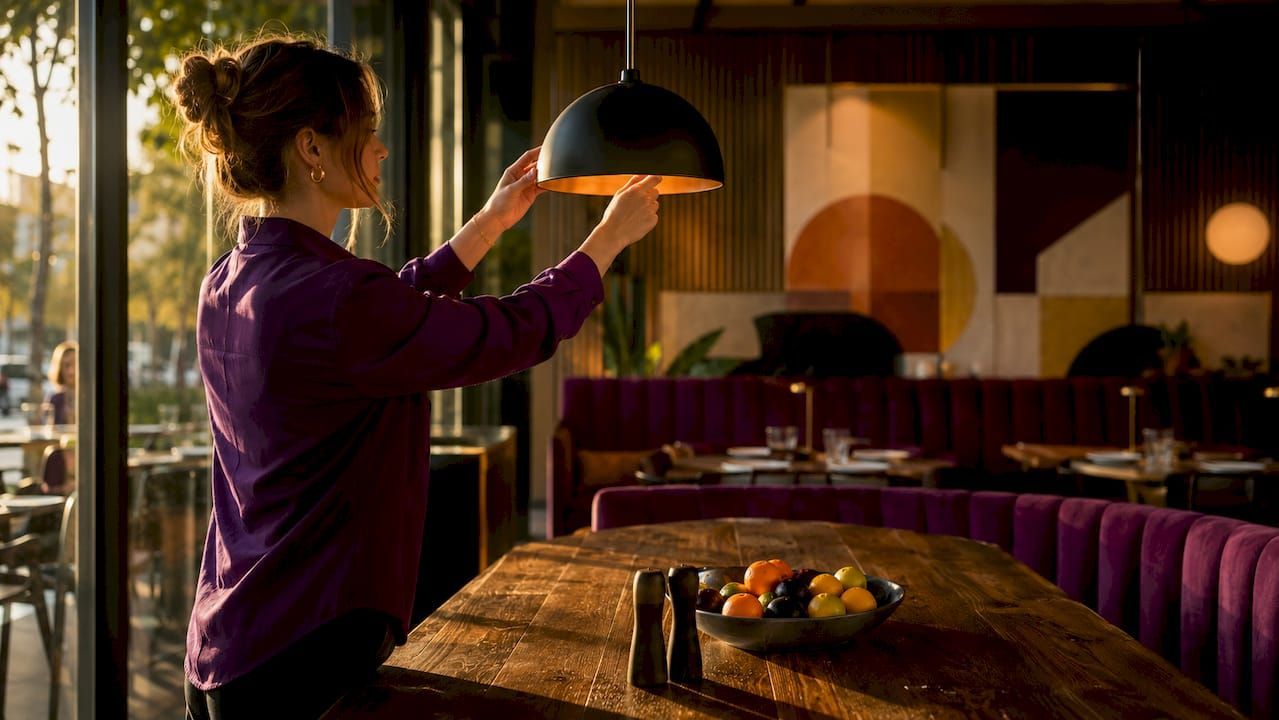
Color is one of the most studied variables in restaurant psychology. Themed interior design produces 17% higher guest satisfaction with color layouts, 22% increased comfort, and 24% more infectious atmosphere compared to generic interiors. Those are not marginal gains. They represent the difference between a forgettable meal and one guests post about and recommend.
Lighting is the single most controllable variable in your space. Warm, dim lighting creates a relaxed ambiance that encourages longer stays and higher spending on add-ons like desserts and cocktails. Bright, cool lighting accelerates pace and suits fast-casual concepts. The key is matching your lighting scheme to your revenue model. A fine dining restaurant that uses fluorescent lighting is working against itself.
Here is how the core aesthetic elements map to brand outcomes:
- Color palette. Warm earth tones communicate comfort and tradition. Bold, saturated colors signal energy and modernity. Neutral palettes let food photography and plating become the visual star.
- Lighting temperature. Warm amber tones (2700K–3000K) encourage lingering. Cooler daylight tones (4000K+) suit cafes and fast-casual formats where turnover is the goal.
- Material selection. Raw wood, stone, and brick communicate authenticity and craft. Polished metal and glass communicate precision and modernity. Materials also affect acoustics, which is a factor most operators overlook.
- Acoustic design. High-energy acoustic environments speed up dining pace and increase spending but reduce conversation quality and comfort. Hard surfaces amplify noise and energy. Soft surfaces absorb it. Your acoustic profile should match your concept.
"The space itself is part of the product. Guests are not just buying a meal. They are buying an experience, and the room is the packaging." — Restaurant design principle cited across hospitality design literature.
What is experiential design and why does it matter?
Experiential design is the practice of using psychology, art, and business strategy together to create environments that guests remember and return to. It goes beyond how a space looks. It addresses how a space feels across every sense.
Profitable restaurant design integrates brand storytelling with multi-sensory experiences, orchestrating atmosphere through lighting, sound, scent, and texture. Each element works on guests subconsciously. The smell of fresh bread near the entrance triggers appetite and comfort. A carefully curated playlist at the right volume signals the energy level of the room. Textured walls and upholstered seating add tactile warmth that guests associate with quality.
Gratification and aesthetics are the design factors most strongly linked to positive word-of-mouth and customer loyalty. Guests who feel genuinely good in your space are the ones who recommend it. That recommendation is worth more than any paid advertising campaign.
Restaurants can also use environmental cues to guide customer behavior subconsciously. Seating spacing signals price point. Music tempo influences how quickly guests eat. Scent near the dessert station increases dessert orders. None of these require expensive renovations. They require intentional thinking about how every element of your space serves your business goals.
- Scent design. Subtle ambient scent near entry points increases appetite and positive mood. Avoid overpowering fragrances that compete with food aromas.
- Sound curation. Match playlist tempo to your desired dining pace. Slower BPM encourages lingering. Faster BPM suits high-turnover formats.
- Texture layering. Mix hard and soft surfaces to balance acoustic energy and visual warmth. An all-hard room feels cold and loud. An all-soft room feels muted and dated.
- Lighting choreography. Use dimmable zones so you can shift the room's energy from lunch service to dinner service without a renovation.
Pro Tip: Ask three regular guests to describe how your restaurant makes them feel. If their answers are vague or inconsistent, your experiential design is not communicating a clear identity. That gap is costing you loyalty.
Design as a strategic asset vs. a cost center
The most common mistake restaurant operators make is treating design as a one-time expense rather than a revenue-generating asset. This mindset leads to underinvestment at opening and neglect over time.
The business case is clear. Well-designed interiors allow premium pricing 15–30% higher than competitors and drive 30–40% higher repeat visit rates. Those numbers compound. A guest who returns four times a year instead of two, and spends 20% more per visit, represents a dramatic increase in lifetime customer value. Design is what makes that possible.
The table below shows how the two mindsets play out in practice:
| Dimension | Cost center mindset | Strategic asset mindset |
|---|---|---|
| Budget approach | Minimize upfront spend | Invest proportional to revenue goals |
| Renovation timing | React to visible deterioration | Refresh proactively every 3–5 years |
| Design decisions | Owner preference and gut feel | Guest research and brand strategy |
| Measurement | No tracking of design impact | Monitor repeat visits, check averages, reviews |
| Brand alignment | Decor chosen independently | Space reinforces brand identity at every touchpoint |
Understanding the role of design in marketing helps restaurant owners see their physical space as part of a larger brand communication system. Your dining room, your logo, your menu, and your website all speak the same language or they work against each other.
Practical steps to optimize your restaurant's design
Improving your restaurant's design does not require a full renovation. Start with an honest audit of your current space and identify the gaps between what your design communicates and what your brand promises.
Here is a practical framework for restaurant owners:
- Gather guest feedback first. Review your most recent Google and Yelp reviews for mentions of noise, lighting, comfort, or atmosphere. These are your guests telling you exactly what to fix.
- Prioritize lighting. Lighting is the highest-impact, lowest-cost change available to most restaurants. Swap bulb temperatures, add dimmers, and reposition fixtures before spending on anything structural.
- Audit your seating comfort. Sit in every seat type in your restaurant for 20 minutes. Note what feels uncomfortable. Guests who are physically uncomfortable leave earlier and spend less.
- Address acoustics with soft materials. Add upholstered panels, curtains, or banquette seating to reduce echo in hard-surfaced rooms. Acoustic comfort directly affects how long guests stay.
- Align materials with your price point. If your average check is above $50 per person, your materials should communicate that. Plastic chairs and laminate tables undercut your pricing story.
- Work with a design professional. A professional who understands both branding and spatial design will identify opportunities you cannot see from inside your own operation. The restaurant logo design workflow is a useful reference for understanding how visual identity and physical space reinforce each other.
- Track your metrics. Measure average check size, table turn time, and repeat visit rate before and after any design change. You cannot manage what you do not measure.
Key Takeaways
Restaurant design directly drives revenue, loyalty, and brand perception. Operators who treat their space as a strategic asset consistently outperform those who treat it as a fixed cost.
| Point | Details |
|---|---|
| Ambiance rivals food quality | 72% of diners rate ambiance as important as food, making design a core product element. |
| Layout drives efficiency | Thoughtful spatial design improves server efficiency by up to 30% and reduces operational friction. |
| Aesthetics justify premium pricing | Well-designed interiors support pricing 15–30% above competitors and increase repeat visits by 30–40%. |
| Multi-sensory design builds loyalty | Gratification and aesthetics are the top drivers of positive word-of-mouth and return visits. |
| Design requires ongoing investment | Treat your space as a living brand asset, not a one-time expense, and refresh it proactively. |
Why most restaurants underinvest in design
I have worked with enough restaurant owners to recognize a pattern. The conversation about design almost always happens at the wrong time. It happens when the lease is signed, the equipment is ordered, and the budget is nearly gone. Design becomes whatever is left over.
That sequence is backwards. The space is the first thing your guest experiences. It forms their expectations before the server says hello, before the menu is opened, and before the food arrives. A beautiful dish served in a poorly designed room still leaves guests with a mixed impression.
The operators I respect most think about their space the way a retailer thinks about a store. Every element is intentional. The lighting is not just functional. It is a mood decision. The music is not background noise. It is a pacing tool. The chair height relative to the table is not an accident. It affects how long guests sit and how comfortable they feel doing it.
The restaurants that struggle with design usually share one trait. They made decisions based on personal taste rather than guest psychology and brand strategy. Personal taste is not a strategy. Your guests' behavior is the data that should drive every design decision you make.
Treat your space as part of your product. Revisit it every year. Ask your guests what they feel, not just what they think. The answers will tell you exactly where your next design investment should go.
— Cesar
How Mycalidesigns helps restaurants build a stronger brand
Your physical space and your visual brand should tell the same story. When they do not, guests sense the disconnect even if they cannot name it.
Mycalidesigns works with restaurant owners to build brand identities that carry through every customer touchpoint, from your logo and menu design to your website and digital presence. We started with logo design and grew because our clients needed more. Today we offer full brand identity and design services built specifically to help businesses like yours look credible, attract the right customers, and grow. If you are ready to align your visual brand with the experience you are creating inside your restaurant, we would love to talk. Explore our website and digital services or reach out directly to start the conversation.
FAQ
How does design affect customer spending in restaurants?
Well-designed interiors increase customer spend by 15–20% and allow premium pricing 15–30% above competitors. Warm lighting, comfortable seating, and intentional acoustics all encourage guests to stay longer and order more.
What is the most impactful design change for a restaurant?
Lighting is the highest-impact, lowest-cost change most restaurants can make. Warm, dim lighting encourages longer stays and higher check totals without requiring structural renovation.
How does table spacing influence the guest experience?
Table spacing signals price point and affects guest comfort directly. Generous spacing communicates premium dining and reduces stress, while tight spacing suits fast-casual formats where turnover is the priority.
Does restaurant design really influence word-of-mouth?
Yes. Gratification and aesthetics are the design factors most strongly linked to guests recommending a restaurant. Guests who feel good in your space are significantly more likely to share that experience with others.
How often should a restaurant refresh its interior design?
Operators who treat design as a strategic asset typically refresh their space every 3–5 years. Proactive updates maintain brand relevance and prevent the gradual decline in guest perception that comes from visible wear and dated aesthetics.
Recommended
Recent Posts