




Manufacturing Website Redesign Guide for Industrial Brands
Manufacturing Website Redesign Guide for Industrial Brands

TL;DR:
- A manufacturing website redesign transforms your site into a sales and compliance asset, emphasizing strategic planning and technical SEO preservation. It requires thorough audits, standardized product data, buyer-focused navigation, and careful URL mapping to safeguard search equity, while content and CTAs should be aligned with procurement intent. Measuring ROI involves tracking RFQ submissions, CAD downloads, and sample orders rather than traffic volume alone, ensuring the site supports long-term business growth.
A manufacturing website redesign is a strategic process that transforms your site into a high-performance sales and compliance asset, not just a visual update. For manufacturing business owners and marketing managers, this distinction matters enormously. A poorly executed overhaul can erase years of SEO authority, expose your company to compliance liability, and frustrate the engineers and procurement managers you need to convert. This guide walks you through every phase of redesigning industrial websites, from pre-launch planning and content architecture to technical SEO preservation and ROI measurement, so your new site works as hard as your production floor.
What prerequisites and planning are essential before a manufacturing website redesign?
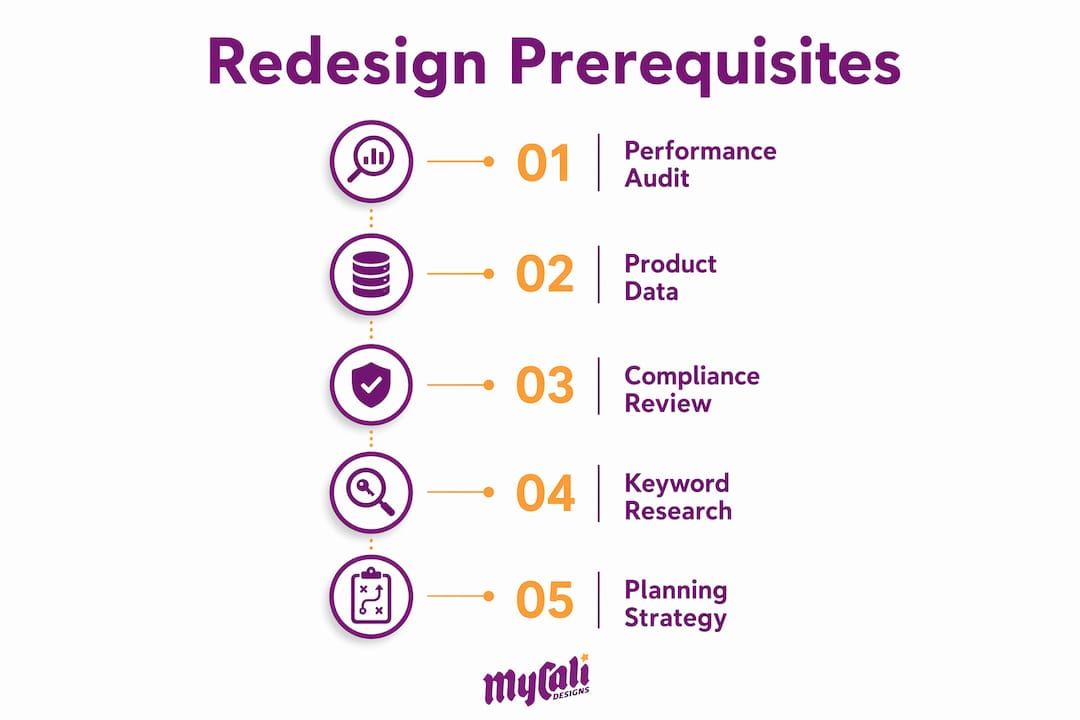
A successful manufacturing website redesign begins with a structured audit, not a mood board. Before any design decisions are made, you need a clear picture of what your current site is doing well, where it creates friction for buyers, and what compliance obligations it must satisfy.
Start with a performance audit covering page speed, bounce rates by product category, and conversion paths for your highest-value pages. Tools like Google Search Console, Screaming Frog, and SEMrush surface the data you need to make informed decisions rather than assumptions. Pay particular attention to which product pages generate RFQ submissions, CAD file requests, or sample orders, because those are the pages your redesign must protect and improve.
Product data is the second major prerequisite. Manufacturing sites often carry hundreds or thousands of SKUs with inconsistent naming conventions, missing specifications, or outdated certifications. A taxonomy mapping exercise, where you standardize product categories, attributes, and naming structures before migration, prevents the kind of data chaos that derails launches. A Product Information Management (PIM) system like Akeneo or Salsify can centralize this work and connect cleanly to your new CMS.
Pro Tip: Involve your compliance and legal teams in the planning phase, not the review phase. Manufacturing websites serve as legally binding documents, and inaccurate specs or outdated certifications create multi-million dollar recall risks. Catching these issues early costs far less than fixing them post-launch.
Here is a practical manufacturing website checklist to complete before any design work begins:
| Prerequisite | Action Required |
|---|---|
| Performance audit | Pull Google Analytics and Search Console data for top pages and conversion paths. |
| Product data audit | Standardize SKU naming, attributes, and certifications across all catalog entries. |
| Compliance review | Verify all specs, claims, and regulatory certificates with legal and compliance teams. |
| Keyword research | Map industrial search terms to product categories and buyer intent stages. |
| CMS and PIM selection | Choose platforms that support your catalog size and ERP/CRM integration needs. |
| Cross-functional team | Confirm participation from marketing, IT, compliance, and sales stakeholders. |
Keyword research for manufacturing carries specific nuances. Engineers search by part number, material grade, or tolerance specification. Procurement managers search by application or industry standard. Your SEO strategy must account for both, which means mapping keywords to buyer roles, not just product categories.
How to execute the design and content strategy for industrial websites
Design for your buyer, not your boardroom. The engineers, procurement managers, and plant supervisors visiting your site are task-oriented. They need to find specifications, download CAD files, verify certifications, and submit a quote request without friction. Every design decision should serve that workflow.

Navigation architecture is the first priority. Group products by application, material, or industry standard rather than internal part numbers that only your team recognizes. Clear pathways to spec sheets, 3D CAD downloads, and compliance certificates should be accessible within two clicks from any product page. This is not a cosmetic preference. It is a conversion requirement.
Faceted search reduces an engineer's SKU search time to under 30 seconds, making it non-negotiable for any manufacturing catalog with more than 50 products. That speed difference translates directly to whether a buyer stays on your site or moves to a competitor who makes filtering easier. Implement filters by material, tolerance, industry certification, and application type.
Content strategy for industrial sites must be compliance-first. Every specification, material claim, and certification reference on your site must be verified before it goes live. Beyond compliance, your content should showcase your facility, manufacturing processes, quality control procedures, and industry certifications like ISO 9001 or AS9100. This builds the trust that procurement teams require before they place a significant order.
Calls-to-action deserve specific attention. High-intent CTAs like "Request a Quote" increase qualified lead conversions by over 20% compared to generic contact forms. The difference is specificity. A buyer who clicks "Request a Quote" on a product page is signaling procurement intent. A buyer who fills out a generic "Contact Us" form could be anyone. Design your CTAs to capture intent signals, not just contact details. You can learn more about effective CTA design and how placement affects conversion rates.
Pro Tip: Use structured content blocks on product pages: a header with the product name and key spec, a tabbed section for full specifications, a download block for CAD files and data sheets, and a sticky "Request a Quote" button. Engineers scan pages rather than read them linearly, and this structure matches that behavior.
Design and content priorities for a manufacturing site makeover include:
- Clean, modern layout with high-contrast typography for spec readability
- Mobile-responsive design that preserves table formatting for technical data
- Facility and process photography that communicates manufacturing capability
- Certification badges and quality standard logos placed near relevant products
- Downloadable resources (spec sheets, CAD files, SDS documents) organized by product
- Customer case studies segmented by industry or application
What technical considerations and SEO practices safeguard site equity during redesign?
Technical execution separates a successful website overhaul for factories from a costly setback. The most common and damaging mistake manufacturers make is underestimating URL mapping complexity. Neglecting 301 redirects causes catastrophic loss of SEO authority accumulated through years of inbound links from trade publications, supplier directories, and industry databases. Every URL that changes during a redesign must be mapped to its new destination before launch day.
A compliance-first migration framework reduces post-launch ranking fluctuations to a manageable 5 to 10%, compared to the severe drops that follow unmanaged migrations. This means running a full technical SEO audit before launch, not after. Core Web Vitals scores, crawlability, structured data markup, and XML sitemap accuracy all need to be verified on the staging environment.
ERP and CRM integration adds another layer of technical complexity. Pulling live inventory data, pricing tiers, or customer-specific catalogs from systems like SAP, Oracle, or Salesforce into your new CMS requires careful API planning. Data population errors at this stage, such as mismatched product IDs or broken attribute mappings, can corrupt your entire catalog at launch.
Content gating strategy also belongs in the technical planning phase. Tiered content gating allows open access to standard spec sheets while placing high-value assets like 3D CAD files or custom configuration tools behind a lead capture form. This approach balances SEO visibility with lead generation, keeping your most useful content indexed while converting serious buyers into identified prospects.
Critical technical steps for launch preparation:
- Complete URL crawl of the existing site and export all indexed URLs
- Build a redirect map pairing every old URL with its new destination
- Implement 301 redirects on the staging server and test each one
- Run Core Web Vitals tests and resolve any Largest Contentful Paint or Cumulative Layout Shift failures
- Verify structured data markup for products, reviews, and organization schema
- Test ERP and PIM data feeds for accuracy across a representative sample of SKUs
- Submit updated XML sitemap to Google Search Console immediately after launch
- Monitor Google Search Console for crawl errors and ranking changes for 60 days post-launch
Post-launch monitoring is not optional. Set up weekly rank tracking for your top 50 product and category pages, and check Google Search Console daily for the first two weeks. Temporary fluctuations are normal, but a sustained drop signals a redirect or indexation problem that needs immediate attention.
How to measure and optimize your redesigned manufacturing website's ROI
Traffic volume is the wrong primary metric for a B2B manufacturing site. Shifting focus from traditional traffic metrics to procurement intent signals produces better business outcomes. A site that attracts 5,000 monthly visitors and generates 50 RFQ submissions outperforms one with 20,000 visitors and 10 generic contact form fills. The goal is sales-enablement measurement: tracking the actions that indicate real purchase intent.
Set up conversion tracking in Google Analytics 4 with distinct events for each high-value action. RFQ form submissions, CAD file downloads, spec sheet requests, and sample order initiations each tell a different story about where a buyer sits in the procurement cycle. Connecting these events to your CRM, whether that is Salesforce, HubSpot, or a manufacturing-specific platform like Infor CRM, gives you full-funnel visibility from first page visit to closed order.
A/B testing is underused in manufacturing marketing. Test the placement and wording of "Request a Quote" buttons across product pages. Test whether showing lead times or certifications above the fold increases RFQ submissions. Test whether a tabbed specification layout outperforms a single-scroll layout for time on page. These tests require patience in B2B because sales cycles are longer, but the data they produce is specific to your buyers and far more reliable than industry benchmarks.
Pro Tip: Use your analytics data to identify which product pages generate the most CAD downloads but the fewest RFQ submissions. That gap signals a content or CTA problem on high-interest pages, and fixing it is often the fastest path to measurable ROI from your redesign investment.
Key performance metrics to track after redesigning industrial websites:
- RFQ submission rate by product category
- CAD file and spec sheet download volume
- Sample order initiation rate
- Time on page for key product and application pages
- Organic search rankings for target industrial keywords
- Bounce rate segmented by traffic source and device type
- Lead-to-opportunity conversion rate from web-generated contacts
Key takeaways
A manufacturing website redesign succeeds when it combines compliance-first content, technical SEO preservation, and sales-enablement measurement from the start.
| Point | Details |
|---|---|
| Plan before you design | Complete a performance audit, product data review, and compliance check before any design work begins. |
| Design for technical buyers | Build navigation, faceted search, and CTAs around how engineers and procurement managers actually use your site. |
| Protect your SEO equity | Map every URL and implement 301 redirects before launch to prevent loss of search authority. |
| Gate content strategically | Keep spec sheets open for SEO while gating high-value assets like 3D CAD files to capture qualified leads. |
| Measure procurement intent | Track RFQ submissions, CAD downloads, and sample orders rather than relying on traffic volume alone. |
What I've learned from working on manufacturing website projects
After working through website projects with industrial clients, the pattern I see most often is this: manufacturers treat the redesign as a marketing project when it is actually a cross-functional business project. The marketing team drives the brief, the IT team gets looped in late, and the compliance team is handed a staging link two weeks before launch. That sequence creates expensive problems.
The compliance dimension alone changes the entire project structure. A manufacturing website is not a brochure. It is a document that buyers, regulators, and legal teams will reference when disputes arise. Specs that are wrong, certifications that have lapsed, or material claims that do not match your current production process are not just embarrassing. They are liability.
The second thing I consistently observe is that manufacturers underestimate how much their buyers have changed. The engineers and procurement managers visiting your site in 2026 expect the same self-service experience they get on consumer platforms. They want to filter by tolerance in three clicks, download a 3D CAD file without calling a sales rep, and get a quote without a phone call. Sites that force them to call for basic information lose those buyers to competitors who do not.
My honest recommendation: avoid generalist agencies for this work. A manufacturing website redesign requires someone who understands industrial brand strategy, product taxonomy, compliance content, and technical SEO simultaneously. Generalists can build a beautiful site. They rarely build one that converts industrial buyers.
— Cesar
How Mycalidesigns helps manufacturers build websites that convert
At Mycalidesigns, we work with manufacturing businesses that need more than a visual refresh. We build websites designed to support your sales process, reflect your technical credibility, and hold up under the scrutiny of procurement teams and compliance reviewers.
Our process covers brand identity, conversion-focused web design services, and SEO integration built specifically for industrial clients. We understand the difference between designing for a consumer audience and designing for engineers who need specs in three clicks. If you are ready to turn your site into a genuine sales asset, we are ready to help you build it right.
FAQ
How long does a manufacturing website redesign take?
A full manufacturing website redesign typically takes 16 to 24 weeks, covering strategy, design, development, content migration, and QA testing. Complex ERP or PIM integrations can extend that timeline.
What is the biggest SEO risk during a manufacturing site redesign?
The biggest risk is failing to map old URLs to new ones with 301 redirects. Skipping this step causes permanent loss of link equity from trade directories, supplier listings, and industry publications that have linked to your product pages over the years.
Why do manufacturing websites need compliance-first content?
Manufacturing websites function as legally binding documents, meaning every specification, material claim, and certification must be accurate and current. Inaccurate content creates product liability exposure and can trigger costly recalls or regulatory action.
What metrics should I track after relaunching a manufacturing site?
Track RFQ submissions, CAD file downloads, and sample order initiations as your primary KPIs. These procurement intent signals tell you far more about sales performance than page views or session duration.
Should spec sheets be gated or open on a manufacturing website?
Spec sheets should be open and indexable for SEO purposes. Reserve gating for high-value assets like 3D CAD files or custom configuration tools, where the exchange of contact information is a reasonable ask for a serious buyer.
Recommended
Recent Posts