




Manufacturing brand strategy: Drive growth and loyalty
Manufacturing brand strategy: Drive growth and loyalty
TL;DR:
- Branding in manufacturing significantly enhances customer trust, loyalty, and premium pricing, driving growth.
- Proactive brand investment builds long-term resilience, providing a competitive advantage and industry credibility.
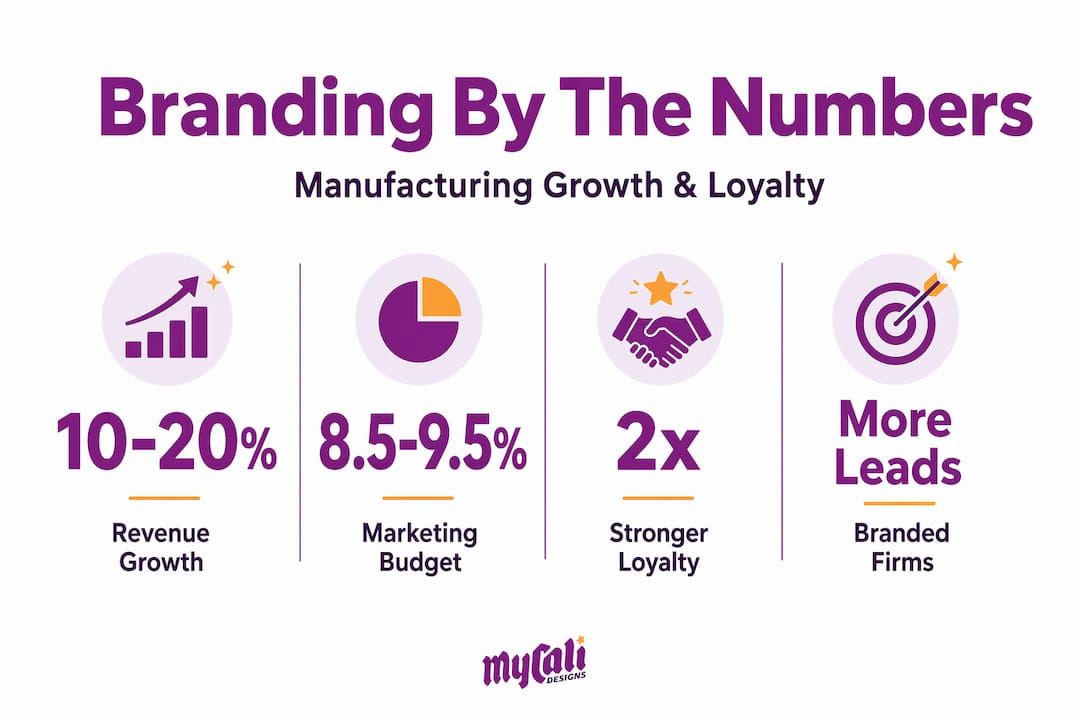
Most manufacturing leaders assume their products do the talking. If the parts arrive on time and the tolerances are tight, customers stay. That assumption is costing businesses real money. Consistent branding contributes to 10-20% annual revenue growth, and the manufacturers who treat brand as infrastructure rather than decoration are quietly outperforming their competitors in retention, pricing power, and new customer acquisition. This guide explains exactly why that gap exists and gives you a practical framework to close it.
Key Takeaways
| Point | Details |
|---|---|
| Branding boosts revenue | Consistent branding can drive 10-20% revenue growth for manufacturers. |
| Builds loyalty and lowers costs | Strong brands reduce price sensitivity and customer acquisition expenses. |
| Strategy matters most | Manufacturers should focus on credibility and clear messaging for branding success. |
| Not one-size-fits-all | Branding impact depends on your industry segment and customer priorities. |
| Start with essentials | Auditing your brand foundation is the first step to measurable gains in reputation and loyalty. |
Why branding matters in manufacturing: Beyond logos and colors
Branding in manufacturing is not about a fresh coat of paint on the logo. It is about the promise your business makes to every buyer, plant manager, procurement team, and distribution partner who interacts with you. Your brand is what people say about your company when you are not in the room.
For manufacturers, that reputation carries real commercial weight. Consider what happens at the negotiation table. When a procurement officer is evaluating two technically similar suppliers, the one with a clear, consistent brand identity signals stability, quality commitment, and low risk. That perception shifts the entire conversation before a single price is discussed.
"Brand is not a marketing luxury. In B2B manufacturing, it is one of the most powerful commercial levers available, directly influencing deal velocity, contract renewal rates, and the price premium you can defend."
The data backs this up firmly. According to research highlighted by Harvard Business Review, 93% of business leaders agree that long-term brand building is essential for sustainable growth. That is not a marketing opinion. That is a consensus among executives who manage revenue targets and shareholder expectations.
Here is what strong branding actually does for a manufacturer:
- Reduces buyer hesitation by establishing credibility before the first sales call
- Supports premium pricing because buyers associate your name with reliability and quality
- Shortens sales cycles by answering trust questions early in the buying process
- Builds retention by creating emotional and reputational anchors beyond product specs
- Attracts talent because skilled workers choose employers with strong, purposeful identities
Working through a branding checklist is a practical starting point if you want to audit where your current brand sits on this spectrum. And if you need a broader foundation, our guide to proven branding strategies walks you through the core identity building blocks in plain language.
Treat branding as a commercial asset. The same way you invest in precision equipment to protect quality output, you invest in brand to protect revenue and relationships.
Branding's real-world impact: Loyalty, price, and lead generation
Understanding the theory is one thing. Seeing the numbers is another. McKinsey research shows that strong industrial brands consistently improve customer loyalty, reduce price sensitivity among buyers, and lower customer acquisition costs across B2B manufacturing sectors.
Let us translate that into situations you likely recognize.
Imagine two custom metal fabrication companies. Both produce comparable quality. One has a clearly defined brand, a professional website, consistent visual identity, and a clear message about their expertise in aerospace tolerances. The other has a generic logo and a website that hasn't been updated since 2018. When a purchasing manager receives a quote from each company, one of those suppliers already has an advantage before the conversation starts.
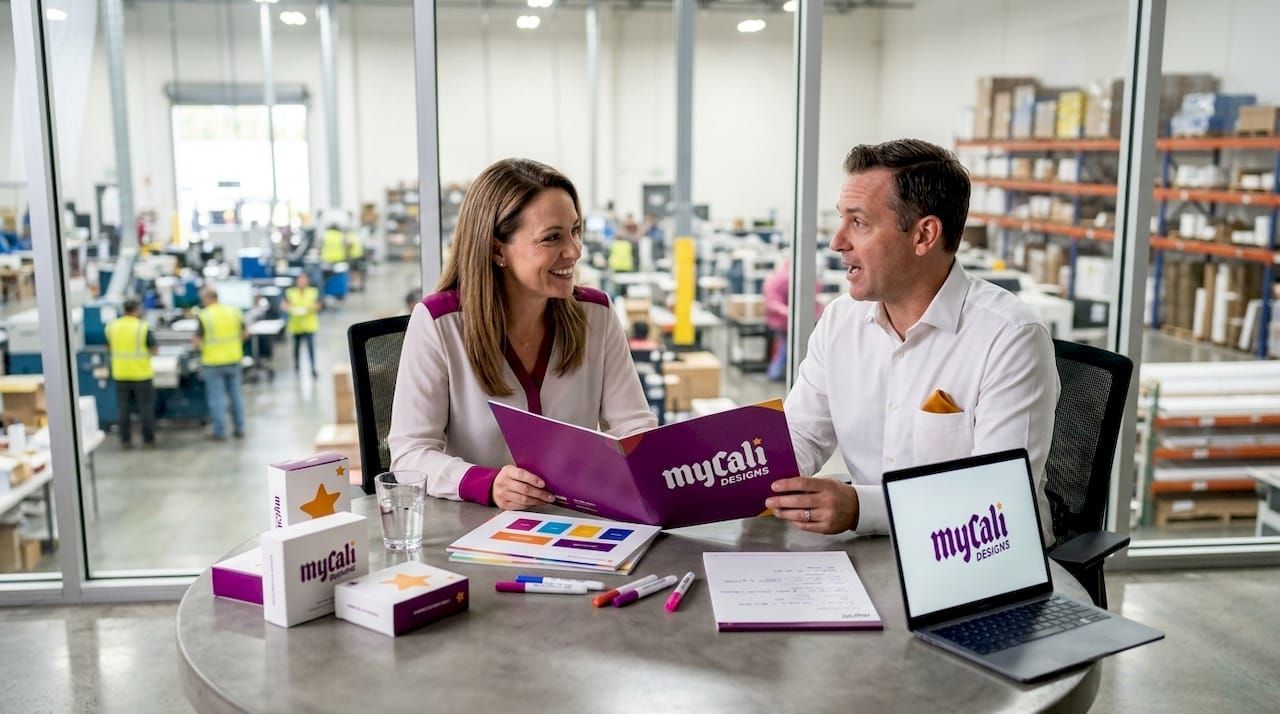
That advantage compounds over time. Loyal customers buy more frequently, refer partners, and push back less on price increases. They are also far less likely to defect when a competitor offers a marginally lower quote. Brand loyalty in manufacturing is not soft. It is measurable in renewal rates, average contract value, and referral volume.
| Branding outcome | Impact on manufacturing business |
|---|---|
| Increased brand recognition | More inbound inquiries, reduced cold outreach costs |
| Stronger trust signals | Shorter sales cycles and faster deal closure |
| Premium brand perception | Ability to defend higher pricing |
| Customer loyalty | Higher renewal rates and lower churn |
| Consistent visual identity | More professional credibility at trade shows and RFPs |
On the lead generation side, manufacturing marketing budgets average 8.5-9.5% of revenue, with digital channels now driving a significant share of new business inquiries. That is a substantial investment. Without a strong brand to anchor those digital efforts, the return on that spend drops considerably. Paid ads, trade show booths, and email campaigns all perform better when they are backed by a brand identity that buyers already recognize and trust.
Pro Tip: Think of brand investment as a multiplier on every other marketing dollar you spend. A well-branded manufacturer gets more mileage from the same marketing budget because recognition and trust are already doing part of the work.
Building digital branding strategies into your overall approach ensures your online presence reinforces the same credibility your sales team works to establish in person. Explore branding ideas that build loyalty to see how even small, consistent touchpoints add up to lasting customer relationships.
Building a manufacturing brand: Proven strategies that work
McKinsey is direct about the approach that works best for industrial companies: treat branding as a commercial asset like pricing or product quality, and focus on credibility over emotional storytelling. Buyers in B2B manufacturing respond to competence, reliability, and technical authority. Your brand should communicate those qualities at every touchpoint.
Here is a practical, step-by-step path to building a stronger manufacturing brand:
-
Audit your current brand presence. Look at your logo, website, sales materials, email signatures, packaging, and trade show assets. Ask honestly: does everything look like it belongs to the same company? Gaps here signal inconsistency to buyers.
-
Clarify your brand promise. What do you do better than anyone else? Maybe it is faster lead times, tighter tolerances, or unmatched responsiveness on custom orders. That differentiator becomes the core of your brand message.
-
Define your visual identity. Choose a color palette, typography, and logo system that reflect your positioning. A precision engineering firm should look different from a bulk commodity supplier.
-
Align internal and external communication. Your sales team, customer service reps, and even your shipping department all carry the brand. Consistency in tone, language, and follow-up professionalism reinforces trust.
-
Apply the brand across digital channels first. Your website is the most visible and highest-impact brand asset you own. Prioritize it before anything else.
-
Expand into physical touchpoints. Product packaging, facility signage, uniforms, and trade show displays all contribute to how buyers perceive your operational standards. Custom visual elements, including custom badge strategies, can elevate in-person brand presence at events and on the floor.
-
Measure and reinforce. Track brand-related metrics like inbound inquiry rate, referral volume, and win rates on competitive bids to see the financial impact over time.
| Branding asset | Priority level | Reason |
|---|---|---|
| Website redesign | High | First touchpoint for most prospects |
| Logo and visual system | High | Foundation for all brand materials |
| Brand messaging guide | High | Aligns team communication |
| Trade show materials | Medium | Visibility at key industry events |
| Product packaging | Medium | Reinforces quality perception |
| Social media profiles | Medium | Ongoing credibility and reach |
| Facility signage | Lower | Internal culture and visitor impression |
Pro Tip: Start with your website and core visual identity before anything else. These two assets influence the most buyer decisions and give you the strongest foundation for every other branding effort that follows.
If you want a structured path, our guide to brand strategy for manufacturers maps the full process from positioning to execution. For the visual side of the work, the visual branding process walks you through each design decision in clear, practical terms.
Industry nuance: When branding matters more—and when it doesn't
Branding is not equally powerful in every corner of manufacturing. Context matters. A company producing commodity-grade steel coils and selling entirely through established distribution channels has a different equation than a specialty aerospace component manufacturer selling directly to OEM engineers.
Research on corporate reputation in industrial purchasing confirms that not all decision-makers weight brand reputation equally. In some procurement environments, price, lead time, and certification status dominate the decision. Brand recognition plays a much smaller role when buyers are selecting from approved vendor lists based on technical compliance rather than preference.
"In highly commoditized or heavily regulated procurement environments, a strong brand may not move the needle on individual purchase decisions. But it still influences long-term partner selection, contract renewals, and the quality of the relationship over time."
So how do you know whether aggressive brand investment is right for your segment? Watch for these signals that branding may be a lower priority lever for your current situation:
- You sell exclusively through distributors who carry your product under their own brand
- Your buyers are governed by strict approved vendor lists with little flexibility for preference
- Your product is fully commoditized with no differentiation opportunity beyond price and lead time
- Your entire customer base is locked into long-term contracts with no near-term renewal decisions
- You operate in a single niche market where every buyer already knows your name
On the other hand, branding becomes a high-priority investment when you are:
- Expanding into new markets or customer segments where you are unknown
- Competing against both domestic and international suppliers on the same RFPs
- Trying to move upmarket toward higher-value, higher-margin work
- Building a direct sales channel alongside or instead of distribution
- Experiencing pricing pressure from lower-cost competitors
Understanding where you sit in this spectrum lets you allocate your branding budget more intelligently. Our guide on brand architecture in manufacturing is particularly useful if you manage multiple product lines or are considering a portfolio restructure.
A smarter path: Branding as your manufacturing multiplier
Here is something we see consistently when working with manufacturers: the companies that invest in brand early, before they feel the pressure, end up in a fundamentally stronger position than those who only turn to branding when growth stalls or a major account walks.
Branding done proactively is infrastructure. It builds quietly in the background, compounding its value with every trade show, every RFP, and every new buyer who discovers your company through a search engine or a colleague's recommendation. Branding done reactively is expensive, slow, and often emotionally charged because there is urgency behind every decision.
The other thing worth saying plainly: brand is insurance. When a pricing war hits your segment, the manufacturers with strong brand identity have a buffer. When a new competitor enters the market with a lower cost structure, buyers who trust your brand hesitate before switching. When your industry faces a downturn and procurement teams shrink their approved vendor lists, your name stays on the list longer because the relationship carries weight beyond price alone.
We have seen manufacturers with genuinely superior products lose accounts to competitors with stronger brands because the perception gap was too wide to overcome at the point of decision. A better product does not always win. A trusted brand combined with a strong product almost always does.
Our practical recommendation: start where credibility matters most. For most manufacturers, that is the website and the core visual identity. Get those right, build the messaging foundation, and then expand from there as results accumulate. You do not need to overhaul everything at once. Steady, consistent brand building compounds just like any other strategic investment. Explore our branding strategies that work to see how that progression plays out in practice.
Elevate your manufacturing brand with our experts
Your manufacturing operation runs on precision, reliability, and performance. Your brand should reflect those same qualities. If buyers cannot see your standards in your visual identity, your website, and your communications, you are leaving real revenue on the table.
At Mycali Designs, we work with business owners and decision-makers who are ready to turn brand into a growth engine. From logo development and visual identity systems to full business branding services designed for companies like yours, we bring the strategy and execution under one roof. If you are curious about what the process looks like or want answers to common questions before you commit, our branding FAQs is a great place to start. Let us help you build a brand that earns trust, commands better pricing, and grows with your business.
Frequently asked questions
How does branding impact the bottom line for manufacturers?
Strong branding drives measurable revenue growth. Research shows that consistent branding contributes to 10-20% higher annual revenue, making it one of the highest-return investments a manufacturer can make.
Is branding important if we sell to other businesses (B2B)?
Absolutely. B2B manufacturing brands that invest in identity and reputation see stronger customer loyalty, reduced price sensitivity from buyers, and lower costs to acquire new accounts.
How much should manufacturers budget for branding and marketing?
Industry data shows that manufacturing companies allocate 8.5-9.5% of revenue to marketing on average, with digital strategies playing an increasingly central role in generating new business leads.
Are there manufacturing sectors where branding isn't worth it?
Yes, in some contexts. Research on industrial purchasing decisions shows that commodity-driven or heavily regulated procurement environments may place less weight on brand reputation, making other factors like price and certification more decisive.
Recommended
Recent Posts