


Restaurant logo design workflow: A step-by-step guide
Restaurant logo design workflow: A step-by-step guide
Your logo is often the first thing a potential customer notices, and restaurants live and die on first impressions. A mismatched or forgettable logo signals that something might be off before a single dish is served. The good news? You do not need a massive budget or a design degree to get this right. A clear, repeatable restaurant logo design workflow takes the guesswork out of the process and gives you a visual identity that genuinely reflects your dining experience. This guide walks you through every stage, from brand clarity to launch day.
Table of Contents
- Clarifying your restaurant brand before logo design
- Choosing your logo design tools and resources
- Step-by-step: Designing your restaurant logo
- Common mistakes and how to avoid them
- Final checks: Testing and launching your logo
- Why workflow is more important than inspiration in restaurant logo design
- Level up your restaurant brand with professional design support
- Frequently asked questions
Key Takeaways
| Point | Details |
|---|---|
| Brand clarity first | Understanding your restaurant's unique personality sets the tone for effective logo design. |
| Right tools matter | Choosing suitable design resources ensures a smooth logo creation process and professional results. |
| Structured workflow wins | Following a step-by-step process helps eliminate errors and supports strong, memorable branding. |
| Final checks essential | Testing your logo across platforms guarantees consistency and maximizes customer impact. |
Clarifying your restaurant brand before logo design
Now that you know the value of a defined workflow, the first step is ensuring your brand direction is clear. A strong brand foundation is essential before you open a single design file or brief a single designer. Without this clarity, you end up with a logo that looks fine but feels disconnected from everything that makes your restaurant special.
Start by writing down your restaurant's mission in one or two sentences. What experience do you want every guest to walk away with? A bustling taco spot in a college neighborhood has a very different story to tell than a quiet fine-dining bistro. Both are valid, but their logos need to reflect their own truth.
Next, define your target audience and your brand personality traits. Think about the words you want customers to use when they describe your place to a friend. Here are some examples to get you started:
- Warm and cozy: Earthy tones, handwritten fonts, rounded shapes
- Modern and upscale: Clean lines, minimalist marks, monochrome palettes
- Family-friendly and fun: Bold colors, playful icons, friendly typography
- Artisan and craft-focused: Vintage textures, hand-drawn elements, muted palettes
- Fast and energetic: Bright contrasting colors, bold type, simple geometry
Align your logo concept with your menu style and physical decor. If your interior features reclaimed wood and Edison bulbs but your logo looks like a tech startup, something is off. Consistency across touchpoints, from the sign out front to the menu in a customer's hands, builds trust faster than any ad campaign. Explore logo design that elevates your brand to see how that alignment plays out in practice, and use a branding checklist to make sure nothing gets missed.
Pro Tip: Before you finalize your brand direction, ask three or four staff members and a handful of loyal regulars to describe your restaurant in three words. Collect those words. You will often find unexpected gems that perfectly capture what makes your place tick.
Choosing your logo design tools and resources
With your brand elements defined, it is time to decide how and with whom you will create your logo. Selecting proper design resources is a crucial early decision in the workflow, and the right choice depends on your budget, timeline, and confidence with creative tools.
There are three main paths restaurant owners typically take. Here is a practical comparison:
| Approach | Estimated cost | Pros | Cons | Time required |
|---|---|---|---|---|
| Professional designer | $500 to $3,000+ | Bespoke, strategic, scalable | Higher upfront cost | 2 to 6 weeks |
| DIY tools (e.g., Canva, Looka) | Free to $100/year | Fast, low cost, easy to use | Generic templates, limited uniqueness | A few hours to days |
| Hybrid (brief a designer, DIY refinements) | $200 to $800 | Balance of cost and quality | Requires clear communication | 1 to 3 weeks |
Each path has its place. If you are opening your first food cart and testing the market, a well-crafted DIY logo can get you started. If you are launching a full-service restaurant or rebranding an established location, investing in a professional is almost always worth it. A professionally designed logo has a measurable impact on brand trust, which translates directly into customer confidence and repeat visits.
Popular DIY tools include Canva, Adobe Express, Looka, and Wix Logo Maker. They offer templates you can customize with your chosen colors and fonts. The limitation is that many other businesses use the same templates, so true differentiation takes extra effort. If you want to understand what working with a professional looks like end to end, the logo design FAQ is a solid resource for setting expectations.
Step-by-step: Designing your restaurant logo
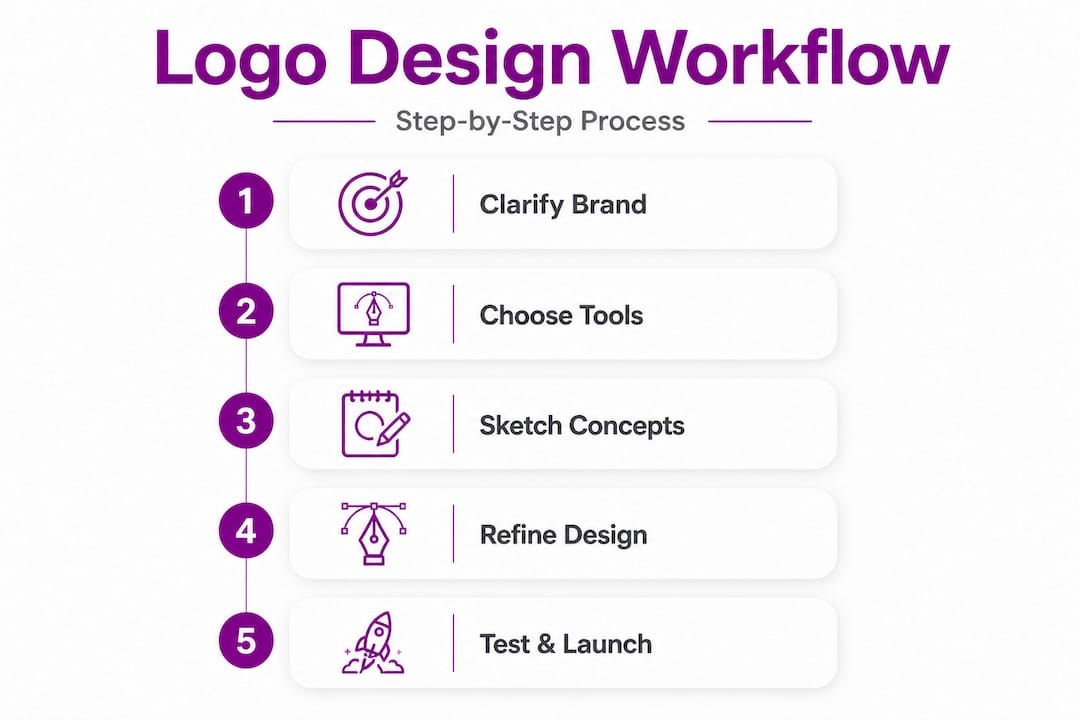
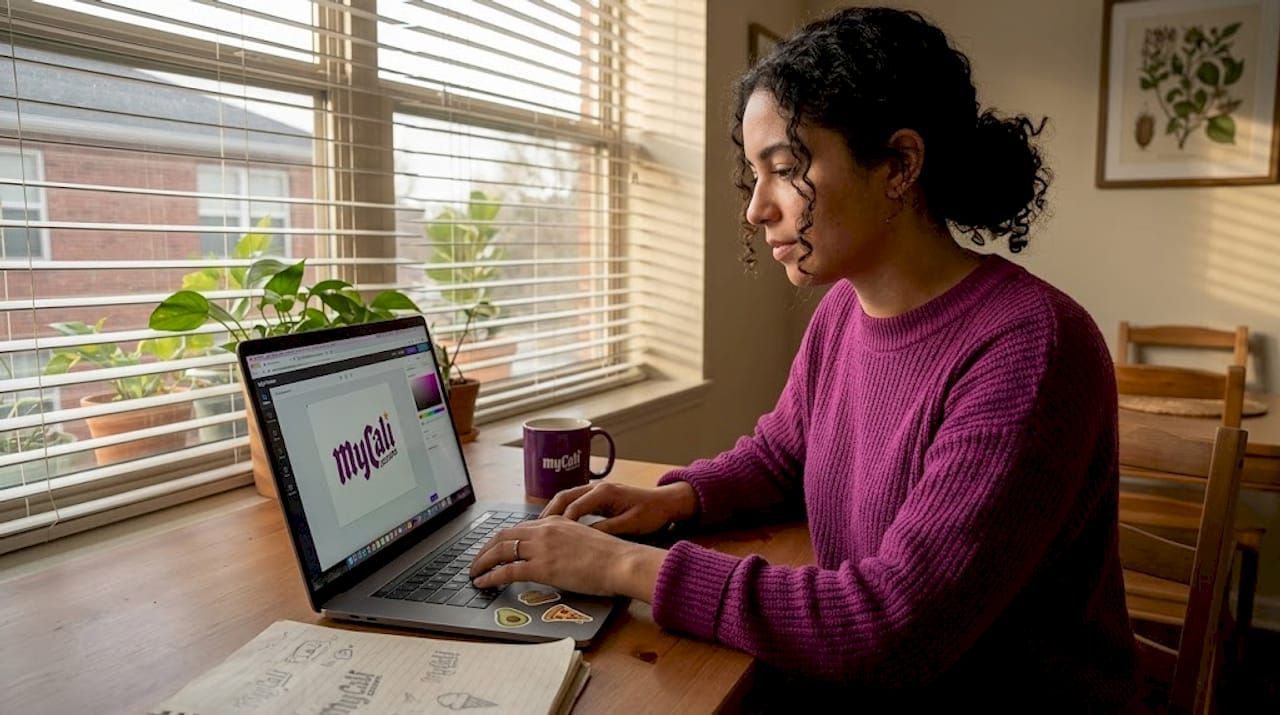
Once resources are decided, it is time to roll up your sleeves and start the design process. A structured workflow increases logo design quality and efficiency, and following these stages in order prevents costly do-overs.
- Research and inspiration gathering. Collect 10 to 15 logos from restaurants you admire, inside and outside your niche. Note what works and why. Pinterest, Behance, and Dribbble are great starting points.
- Concept sketching. Put pencil to paper before touching a screen. Rough sketches are fast, low-stakes, and often produce the most creative ideas. Aim for at least 10 thumbnail sketches.
- Digital drafting. Bring your best 2 or 3 sketch ideas into a design program. Vector tools like Adobe Illustrator or Affinity Designer are ideal for restaurant logos because they scale without losing quality.
- Color and font selection. Choose colors that match your brand personality and perform well in both print and digital formats. Select one primary font and one supporting font at most.
- Feedback round. Share your top two designs with trusted people: staff, close customers, maybe a fellow business owner. Ask specific questions rather than "do you like it?"
- Revision. Incorporate actionable feedback, not every opinion. Decide what aligns with your brand direction and update accordingly.
- Final handoff. Collect all final files in multiple formats.
Different logo styles suit different restaurant types. Here is a quick comparison:
| Logo format | Description | Best restaurant use-case |
|---|---|---|
| Iconic or symbol mark | A standalone graphic icon | Coffee shops, fast-casual spots |
| Wordmark | Stylized text of restaurant name | Upscale or fine-dining venues |
| Lettermark | Initials only | Multi-location or franchise restaurants |
| Combination mark | Icon plus text together | Most versatile, good for new restaurants |
| Emblem | Text inside a badge or seal | Craft breweries, classic diners |
Combination marks are usually the safest choice for new restaurants because they give you flexibility. You can use the full version on your signage and the icon alone on social media avatars or uniform embroidery.
Pro Tip: When working with a designer, always request a scalable vector file (SVG, AI, or EPS format). Raster files like JPG or PNG lose quality when enlarged. A vector file ensures your logo looks crisp on a billboard and a business card alike.
Common mistakes and how to avoid them
Even with the right workflow, small missteps can derail your logo's impact. Knowing these risks lets you design with confidence. Avoiding common errors leads to noticeably better logo outcomes, and most of these mistakes are easy to prevent once you know what to watch for.
"Consumers form an opinion about a visual within 50 milliseconds. A logo that confuses, clutters, or misleads in that window does not get a second chance."
Here are the most common restaurant logo mistakes and how to sidestep each one:
- Over-complexity. Too many fonts, icons, and colors create visual noise. A good restaurant logo works in black and white and at thumbnail size.
- Ignoring brand voice. A playful food truck does not need a formal serif font. Make sure every design choice reflects your actual personality.
- Chasing trends. Trends fade fast. Gradient logos and certain flat design styles that looked fresh a few years ago already feel dated. Design for longevity.
- Poor scalability. If your logo falls apart at small sizes (like a social media profile photo), it will hurt your digital presence daily.
- Wrong color usage. Colors carry psychological meaning. Red and yellow stimulate appetite; dark navy and gold suggest luxury. Use color with intention, not just preference.
- Skipping the competition check. If your logo looks too similar to a competitor's, you create confusion instead of recognition.
If your existing logo suffers from several of these issues, it may be time to consider a refresh. Reviewing your brand refresh readiness is a practical first step before committing to a full redesign.
Final checks: Testing and launching your logo
After designing and refining, these final steps ensure your logo looks great everywhere and is ready for the spotlight. Testing logo usability across all touchpoints ensures consistency and memorability, and skipping this stage is one of the most common ways restaurant owners end up with a logo that underperforms in the real world.
Work through this checklist before you go live:
- Print test. Print your logo in black and white at both large (poster) and small (business card) sizes. If it holds up, you are in good shape.
- Digital mockups. Place your logo on a mock menu, a social media header, and a website favicon. Use free tools like Smartmockups or Canva mockup templates.
- Readability check. Ask someone unfamiliar with your brand to read your restaurant name from your logo at arm's length. If they hesitate, the font needs work.
- Color accuracy test. Compare how your brand colors look on a monitor versus a printed page. Colors can shift significantly between digital and print formats.
- Gather real customer feedback. Before committing to signage or menus, share the logo with five to ten customers. Ask whether it matches what they know and love about your restaurant.
- File format verification. Confirm you have all necessary formats: vector files for print and press, PNG with transparent background for digital use, and a simplified version for small-format applications.
If you need location-specific guidance on getting a polished final product, the team behind logo design in Davis works through exactly these final-stage checks with every client.
Pro Tip: Run a soft launch by posting your new logo on social media two weeks before it appears on signage or menus. This creates buzz, gives you one last round of public feedback, and builds anticipation. It also helps catch any last-minute issues before they become expensive problems.
Why workflow is more important than inspiration in restaurant logo design
Here is a take that often surprises restaurant owners: the most beautiful restaurant logos rarely came from a single brilliant flash of inspiration. They came from a disciplined process that pushed past the first good idea and kept building.
Inspiration is fleeting. You might find the perfect image at 2 a.m. and feel completely differently about it by noon. A defined workflow forces you to test, challenge, and validate every creative decision before it becomes permanent. That discipline is what produces logos with long-term value, logos that still work five years from now when design trends have shifted completely.
Restaurants that skip steps in the name of speed often end up with logos they outgrow within two years. We have seen it happen repeatedly. The owner rushed to launch, loved the logo in the moment, and then started a rebrand 18 months later because the mark felt too narrow or too trendy to support where the business had grown. A disciplined workflow ensures your brand's story is consistently communicated from day one, not just during the honeymoon phase.
"The biggest logo design regret we hear from restaurant owners is not a bad design choice. It is a skipped step. Skipping steps for speed or trendiness is how you end up redesigning sooner than you planned."
The other thing a strong workflow gives you is documentation. When you know why you chose a specific color, font, or icon, every future marketing decision becomes easier. Signage, uniforms, packaging, social media graphics, they all stay on brand naturally because the reasoning is already recorded.
Strong logo design and brand trust are deeply connected. Customers who encounter a consistent, well-considered visual identity are far more likely to trust your restaurant before they ever taste the food.
Pro Tip: After your logo is finalized, create a one-page brand reference document that records your logo files, color codes (in HEX, RGB, and CMYK), font names, and a short note about what each element represents. Share it with anyone who handles your marketing.
Level up your restaurant brand with professional design support
If you would rather streamline this process or get expert creative input, professional design support is just a click away. Working with a creative partner means you bring your vision and we bring the strategic design thinking, so you get a logo that is not just beautiful but built to grow with your business.
At Mycali Designs, we offer professional branding solutions tailored to restaurants at every stage, whether you are launching your first location or refreshing an established brand. Our custom logo design services are designed to reflect your unique dining experience and make a strong first impression. From concept to final file handoff, we handle every detail so you can stay focused on what you do best: running a great restaurant. Connect with our restaurant logo experts and let's build something your customers will recognize and remember.
Frequently asked questions
How long does a restaurant logo design process usually take?
Most professional logo design processes take 2 to 6 weeks, depending on the number of revisions, stakeholder approvals, and how quickly feedback is provided.
What files should I receive after my logo is completed?
You should receive vector files (SVG, AI, EPS) for print use and web-friendly files (PNG, JPG) for digital use. Professional logo handoffs always include both formats for versatile application.
What if I want to update my restaurant logo in the future?
Retaining your original vector files makes future updates quick and cost-effective. A strong brand identity is built to allow logo refinements over time without losing customer recognition.
How can I tell if my logo is ready to be launched?
A launch-ready logo performs well at all sizes, reads clearly in both color and black and white, and accurately reflects your restaurant's personality and customer expectations. Testing logo usability across menus, signage, and digital platforms is the final confirmation you need before going public.
Recommended
- How to design a logo that elevates your brand
- Visual branding process: 5-step guide for SMB success
- Logo design: The real impact on brand trust and growth
- Logo FAQ's
- Brand Identity Tips for Marketing Pros: Boost Results 23% - Palmador Blog
- Elevate your brand identity: What is visual branding? | AMW Media
Recent Posts