



Branding Trends 2026: Stand Out in a Human-First Era
Branding Trends 2026: Stand Out in a Human-First Era
The conventional wisdom says AI will eventually replace human creativity in marketing. But the data tells a very different story. As we move through 2026, brands increasingly differentiate through human judgment rather than algorithmic output, and the most forward-thinking marketers are capitalizing on this shift right now. Whether you manage a growing retail brand or lead creative strategy at a mid-sized firm, this guide will help you understand what's changing, why it matters, and how to position your brand to win in a market that's rewarding authenticity over automation.
Table of Contents
- Why 2026 marks a human comeback in branding
- The top branding trends defining 2026
- How small business brands can take action
- Case studies: Brands winning with human-first strategies
- Why embracing imperfection is the new branding superpower
- Build a future-ready brand with expert support
- Frequently asked questions
Key Takeaways
| Point | Details |
|---|---|
| Human creativity leads | Standing out in 2026 means leveraging human insight with purpose and personality. |
| AI is a tool, not a brand | Brands that use AI carefully while letting humans make the big calls will win trust. |
| Transparency matters | Clear responsibility and honest messaging build credibility in today's market. |
| Action beats waiting | Jump in early with small experiments on human-driven content and collaboration. |
Why 2026 marks a human comeback in branding
There is an irony playing out in the marketing world right now. The more AI tools flood the market with fast, polished, and endlessly scalable content, the more audiences crave something unmistakably human. This isn't nostalgia. It's a strategic market signal.
"Design and identity in 2026 is positioned as a direct response to AI. Brands will increasingly differentiate through human judgment and responsibility as the landscape produces many AI-driven responses."
What this means practically is that the brands winning attention and loyalty today are those that can show intentionality. Not just what they made, but why they made it, who made the call, and what values guided that decision. Audiences are trained, whether consciously or not, to detect algorithmic sameness. When they encounter a brand that feels genuinely considered, they notice.
Here is what separates brands that will lead in 2026 from those that will blend into the noise:
- Clarity of responsibility: Brands clearly communicate who stands behind their creative decisions, building accountability into their public identity.
- Intentional design choices: Every visual element, message, and campaign reflects deliberate human thinking, not default AI outputs.
- Tech-forward, human-led: AI tools power efficiency in production, but humans drive strategy, tone, and meaning.
- Consistent voice across platforms: A brand that sounds the same on LinkedIn as it does in a product label signals a living, breathing identity.
Understanding design thinking in 2026 is becoming as essential as understanding your customer persona. Great brand partnership examples from leading companies already show this principle in action: the brands that resonate most deeply are those built on clear human values, not just clean visual templates.
The top branding trends defining 2026
Now that you see the broader context, here are the five concrete trends shaping brand success this year. Each one offers a real opportunity for small and midsize businesses to differentiate and grow.
1. Human-first storytelling
Brands are moving away from polished, generic narratives and toward stories that feel specific, grounded, and real. This means featuring actual team members, sharing honest behind-the-scenes decisions, and building a narrative arc that only your brand could tell. Generic storytelling is easy to produce with AI. Specific, emotionally resonant storytelling is not.
2. Selective and transparent AI use
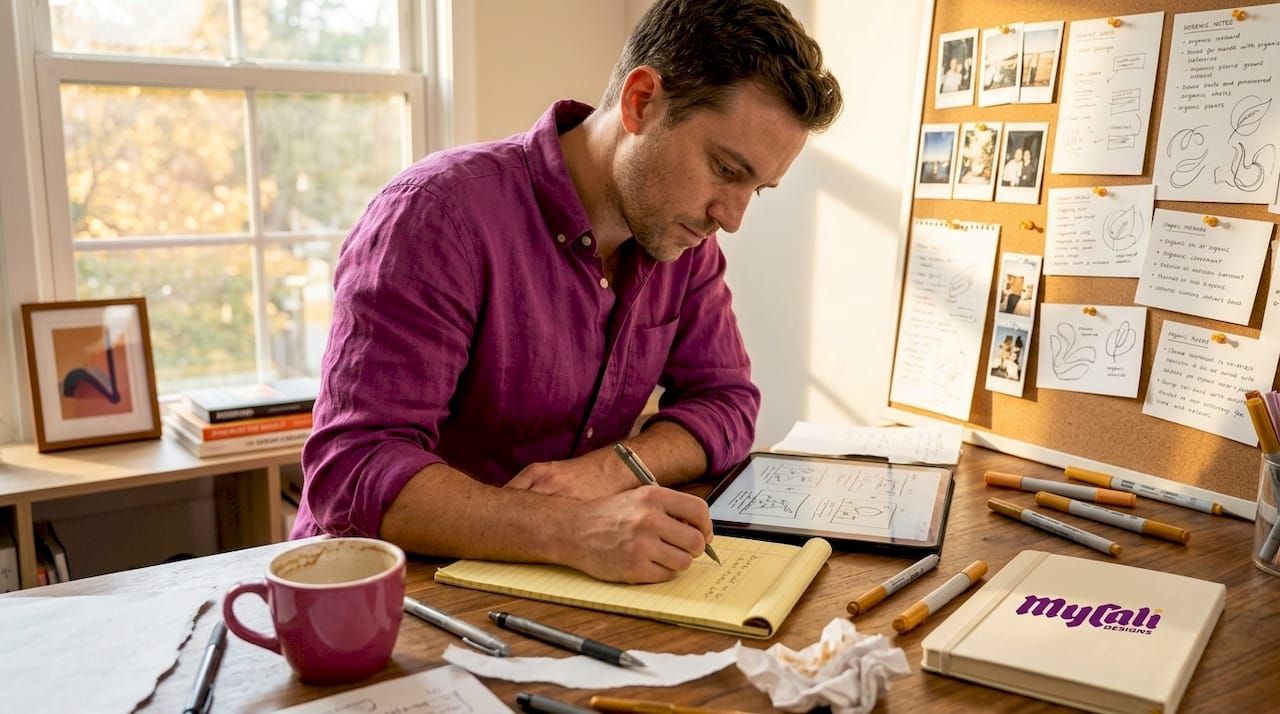
Smart brands are not avoiding AI. They are using it selectively and saying so openly. Consumers increasingly respect brands that are honest about where AI adds value in their process and where human judgment takes over. Transparency here builds trust rather than eroding it. This is directly tied to the insight that brands differentiate through clearer responsibility in the age of AI.
3. Dynamic visual identities
Static logos and fixed color palettes are giving way to flexible brand systems that adapt in real-time across platforms. Think of a visual identity that responds to context: a bolder version for social ads, a quieter version for email, a seasonal variation for product launches. The visual branding process for SMBs increasingly demands this kind of adaptability from the start.
4. Purpose-driven partnerships and collaborations
Brands are forming tighter, more intentional alliances with creators, complementary businesses, and community organizations. These aren't just co-marketing plays. They are shared expressions of values. Influencer content strategies in 2026 are built on aligned purpose, not just audience size.
5. Interactive and participatory brand experiences
Audiences want to do more than observe a brand. They want to interact with it, shape it, and feel heard by it. Brands delivering polls, community-driven product decisions, and user-generated content campaigns are building deeper loyalty than brands that simply broadcast.
Pro Tip: Before chasing every trend, use a solid branding checklist for small businesses to audit your current foundation. You can't adapt dynamically if your core identity is unclear.
Here is a quick comparison of legacy branding approaches versus 2026-ready strategies:
| Branding element | Legacy approach | 2026 approach |
|---|---|---|
| Logo design | Fixed, single-use mark | Flexible system with context variations |
| Brand voice | Formal, polished, consistent | Human, specific, and occasionally imperfect |
| AI use | Avoided or fully automated | Selective, with transparent disclosure |
| Partnerships | Transactional sponsorships | Purpose-aligned collaborations |
| Audience relationship | One-way broadcast | Two-way participation |
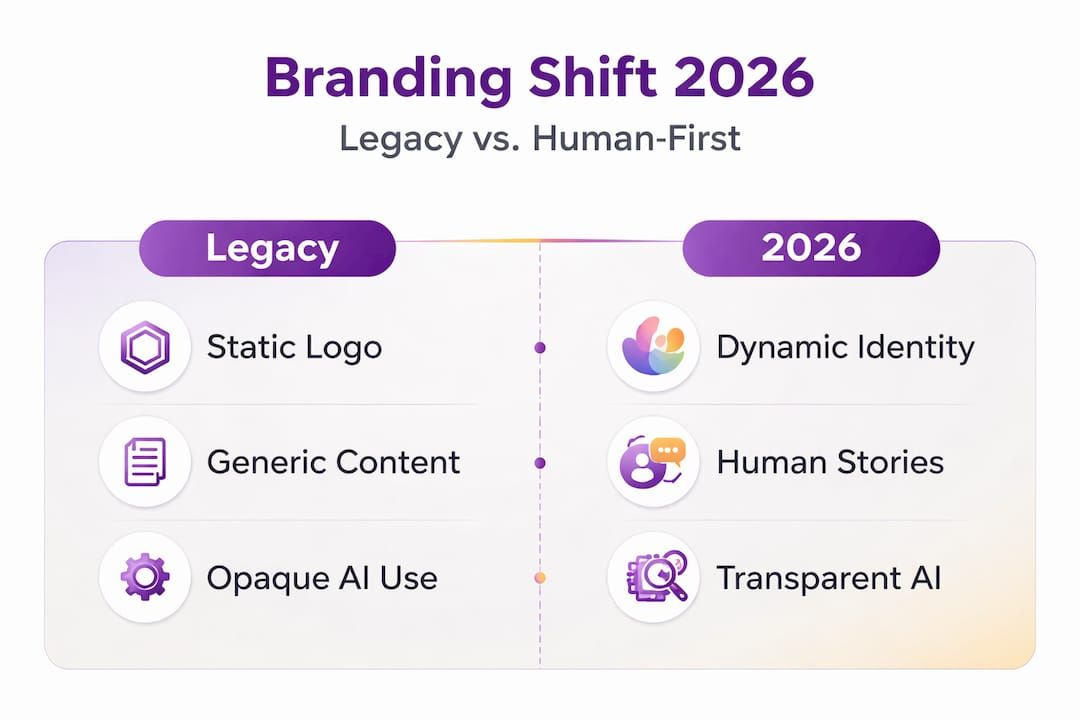
The shift from the left column to the right column is not a design trend. It is a fundamental change in how brands earn trust and attention in a crowded, AI-saturated market.
How small business brands can take action
With the trends defined, the next step is getting specific about what your business can actually do right now. Trends mean nothing without execution.
1. Audit your brand for transparency and responsibility
Go through your website, social channels, and marketing materials. Ask yourself: does a customer know who stands behind this brand? Is it clear what values guide your decisions? If the answer is vague, that's your first fix. Even a simple "about" page rewrite that names real people and real commitments makes a measurable difference.
2. Partner with a design team early in the process
2026 is being called a "techno-political moment" for design, where designers take more active roles in helping clients navigate creative and even ethical choices. This means your design partner is not just executing visuals. They are helping you make strategic brand decisions. Start that collaboration earlier than you think you need to.
3. Test responsive visual assets across platforms
Run a simple experiment. Take your current logo and brand colors and test them across three formats: a social media post, an email header, and a product image. Do they hold up? Do they feel cohesive yet appropriately varied? If they don't adapt well, your visual identity needs a more flexible system.
4. Draw a clear line between AI and human decision-making
Create an internal framework that defines where AI serves you versus where human judgment must lead. For example, AI might handle ad copy variations and scheduling. But your brand voice, your campaign narrative, and your creative direction should come from people who understand your values and your customers. Use tools like an AI search readiness audit to understand how your brand shows up in AI-driven search environments.
5. Build co-marketing relationships with aligned brands or creators
Identify three to five businesses or creators in your market whose values genuinely align with yours. These don't need to be huge names. A local business with a loyal following and shared values can deliver more meaningful brand equity than a generic influencer deal. Resources on building influencer relationships show that authenticity of fit outperforms reach in almost every long-term branding metric.
Pro Tip: Consider investing in your digital marketing for brands alongside your visual identity work. In 2026, how your brand looks and how it gets found are inseparable strategies.
Here is a practical action timeline for SMBs implementing 2026 branding trends:
| Timeframe | Action | Expected outcome |
|---|---|---|
| Weeks 1-2 | Brand transparency audit | Identify messaging gaps and responsibility gaps |
| Weeks 3-4 | Design partner consultation | Align on flexible visual identity needs |
| Month 2 | Responsive asset testing | Confirm brand adaptability across channels |
| Month 3 | AI vs. human framework | Clearer internal creative decision-making |
| Month 3-4 | Partnership outreach | Initial co-marketing relationships established |
Small steps taken consistently deliver more lasting results than trying to overhaul everything at once.
Case studies: Brands winning with human-first strategies
Seeing trends in action makes them real. Let's look at what's working for brands that have prioritized human creativity and accountability in 2026.
"Design and identity in 2026 is positioned as a response to AI, with brands differentiating through human judgment and intentional creative decisions."
Challenger food and beverage brands
Several mid-sized food brands have made founder-led storytelling the center of their marketing. Rather than polished ad campaigns, they publish honest video updates from their founders, showing real production decisions and even mistakes. The result is a level of audience trust that no AI-generated content calendar could replicate. Customers feel like they know the people behind the product.
Independent retail and lifestyle brands
Smaller retail brands are winning by making their design process visible. They share mood boards, early logo concepts, and the reasoning behind color choices directly with their communities. This transparency turns the design process itself into a marketing asset. It also signals exactly the kind of human judgment that brand refresh readiness requires: knowing when to evolve and being open about why.
Purpose-driven service brands
Consulting firms and creative agencies that have built co-marketing relationships with aligned partners are seeing stronger referral pipelines and more cohesive brand positioning. Brand partnership case studies consistently show that when two brands share a clear reason for collaborating beyond revenue, their combined audience perceives both brands as more credible.
Key lessons from these examples:
- Visible human decision-making builds more trust than flawless production value.
- Transparency about your creative process is a differentiator, not a vulnerability.
- Purpose-aligned partnerships signal values to your audience in ways that solo brand messaging cannot.
- Consistent, specific storytelling outperforms broad, polished campaigns when budgets are limited.
The brands thriving right now are not the ones with the biggest AI toolkit. They are the ones with the clearest sense of who they are and the courage to show it.
Why embracing imperfection is the new branding superpower
Here is a perspective that most branding articles won't say directly: trying to look too polished is quietly working against a growing number of brands in 2026.
We've worked with enough businesses to see a pattern. When brands chase perfection above all else, especially by relying heavily on AI-generated visuals, copy, and campaigns, they start to look and sound like everyone else. The irony is that the pursuit of a flawless brand identity often produces the most forgettable one.
Audiences today are more sophisticated than they're given credit for. They can detect algorithmic consistency the same way they can detect stock photography in a website that claims to be personal. When everything is optimized, nothing stands out.
The brands building real loyalty in 2026 are doing something that feels almost counterintuitive. They are showing the rough edges. They are publishing a campaign that clearly came from a human brain rather than a prompt. They are letting their founder speak in their actual voice, not a brand-filtered version of it. They are making specific design choices that not everyone will love, because those choices mean something.
This doesn't mean lowering your standards. Following proven branding steps is still essential for building a coherent identity. But within that structure, there is real power in allowing your brand to feel lived-in, specific, and occasionally imperfect.
The brands that will own their markets in 2026 are not trying to out-AI their competitors. They are doing the harder thing: building something that reflects real human judgment, real values, and a real reason to exist. That is a standard no algorithm can easily replicate, and it is the most durable competitive advantage available to any brand right now.
Build a future-ready brand with expert support
The branding landscape in 2026 rewards brands that act with intention, clarity, and a strong sense of identity. Understanding these trends is one thing. Translating them into a brand that actually grows your business is where the real work begins.
At Mycali Designs, we help small and midsize businesses do exactly that. From strategic business branding services that align your visual identity with your growth goals, to logo systems built for flexibility across platforms, we bring both creative expertise and business strategy to every project. If you're unsure where to start, our branding FAQs walk you through the most common questions brands face when making strategic identity decisions. We'd love to be the design partner that helps you lead the curve in 2026, not just keep up with it.
Frequently asked questions
How is AI shaping brand identity choices in 2026?
AI is pushing brands to lead with human creativity and clearer accountability, since brands differentiate through human judgment rather than competing on AI output alone.
What is the biggest branding mistake to avoid in 2026?
Over-relying on automation and generic AI-generated content; the brands standing out are those where human judgment guides responsibility in creative decisions.
Which branding trend is easiest for SMBs to implement?
Human-first storytelling is the most accessible starting point, since even small content updates, like naming real team members and sharing honest brand decisions, directly support the shift toward brands responding to AI with authenticity.
Should brands avoid using AI tools altogether?
Not at all. Use AI to handle production efficiency, but make sure the strategy, voice, and creative direction reflect genuine human values, since brands increasingly differentiate through human judgment rather than by eliminating AI entirely.
Recommended
Recent Posts