



How to Build a Manufacturer Brand That Commands Premium Pricing
How to Build a Manufacturer Brand That Commands Premium Pricing
TL;DR:
- Building a manufacturer brand shifts market focus from price and features to trust, value, and long-term relationships.
- Success requires understanding target buyers, differentiating through genuine strengths, and maintaining consistency across all touchpoints.
Most manufacturers compete by publishing spec sheets, cutting prices, and hoping the numbers speak for themselves. They rarely do. When every competitor offers similar tolerances, certifications, and lead times, buyers have no reason to choose you over the next supplier. Learning how to build a manufacturer brand changes that equation entirely. A strong brand shifts the conversation from price to value, from features to trust, and from transactions to long-term partnerships. This article gives you a practical blueprint for making that shift.
Key takeaways
| Point | Details |
|---|---|
| Start with market research | Profile your buyers' operational pain points before crafting any messaging or visual identity. |
| Position on value, not features | Define a focused brand territory like responsiveness or quality assurance rather than listing specs. |
| Consistency drives recognition | Apply your brand identity across every touchpoint to shorten sales cycles and reduce friction. |
| Align sales and marketing | Train your team to sell on brand positioning using case studies and ROI data, not price alone. |
| Measure what matters | Track win rates, referral rates, and share of search to verify brand impact over time. |
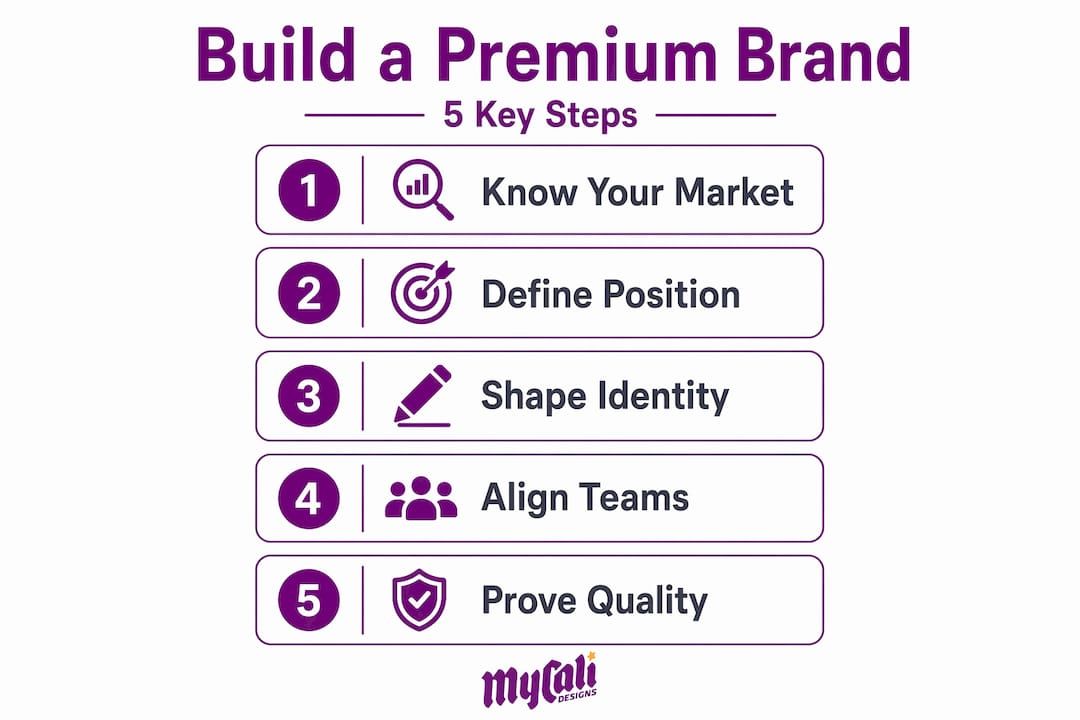
How to build a manufacturer brand: start with your market
Before you design a single logo or write a single tagline, you need to understand who you're selling to and what the competitive field actually looks like. Skipping this step is the single most common reason manufacturer brands fail to gain traction.
Start by building detailed profiles of your target industrial buyers. Go beyond job titles. You want to understand their daily operational pressures, what keeps them up at night, and how they evaluate suppliers. A procurement manager at a mid-size OEM worries about downtime, compliance failures, and supply chain reliability. A plant engineer cares about tolerances, documentation quality, and your ability to respond when something goes wrong. These are very different motivations, and your brand needs to speak to them directly.
Next, analyze your competitors' messaging. Most manufacturer websites look and sound almost identical: a hero image of a factory floor, a list of certifications, and a contact form. That sameness is your opportunity. Look for the gaps. Which pain points are they ignoring? Which claims are vague or unsubstantiated? Where are buyers likely frustrated or underserved?
Then turn inward. Map the capabilities, technologies, and service approaches that genuinely differentiate your company. This is not a list of everything you do. It's a short, honest inventory of what you do better than anyone else in your category. Proprietary processes, faster turnaround times, specific certifications, or dedicated customer support all count.
- Conduct 5 to 10 customer interviews focused on decision criteria and frustrations, not satisfaction scores
- Ask buyers what they would lose if your company disappeared tomorrow
- Review your win and loss reports for patterns that reveal your actual competitive strengths
- Survey lost prospects to understand why they chose a competitor
Pro Tip: Ask your best customers to describe your company in their own words. Their language is often more compelling than anything your internal team would write, and it reflects how real buyers actually think about your value.
Crafting a brand position that actually holds up
Branding for manufacturers is fundamentally about positioning, not product features. Understanding that distinction is the foundation of everything that follows.
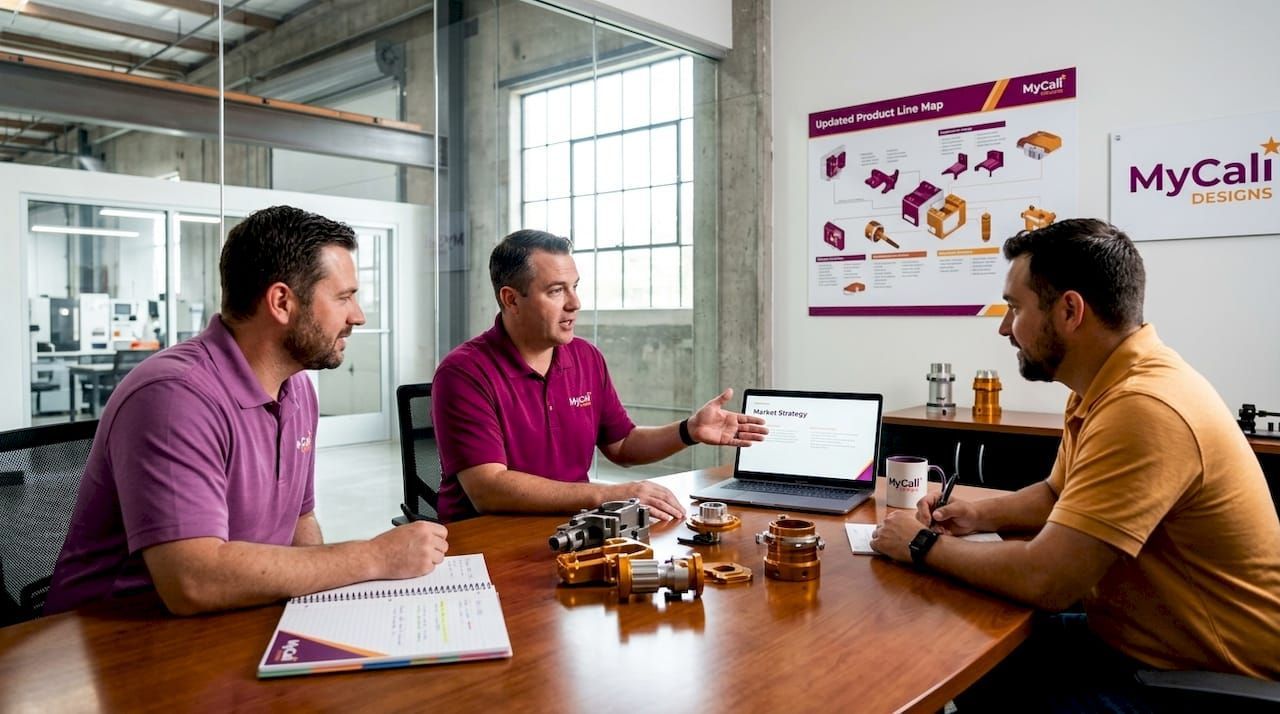
Positioning is the specific place your brand occupies in a buyer's mind relative to competitors. A feature is something your product does. Your position is what your company means to the people who buy from you. A manufacturer can have excellent tolerances and still have no brand position if buyers cannot articulate why they trust you over the alternative.
Here is how to develop a position that sticks:
- Choose a focused brand territory. Pick one or two themes that you can own credibly. Options include responsiveness (fastest problem resolution in the category), quality assurance (zero-defect processes with full documentation), technical partnership (your team functions as an extension of the customer's engineering team), or compliance leadership (you make regulatory complexity manageable). Do not try to own everything.
- Build messaging around concrete pain points. Consistent brand positioning addresses buyer concerns like downtime risk, quality control failures, and compliance exposure rather than leading with product specs. Write your messaging to solve a problem first and describe your product second.
- Develop a consistent brand voice. Industrial buyers respond to language that is direct, confident, and specific. Avoid vague corporate-speak like "world-class" or "end-to-end solutions." Instead, describe outcomes: "Customers reduce rework by 30% in the first quarter" is more credible than any adjective you can attach to a product name.
- Create a messaging framework. Document your positioning statement, primary buyer benefit, three supporting proof points, and your brand voice guidelines. This framework becomes the source of truth for everyone who communicates on behalf of your company, from your sales reps to your trade show booth staff.
Pro Tip: Test your positioning statement with three people outside your company. If they cannot repeat the core idea back to you in their own words after one reading, the message is too complicated. Simplify until it sticks.
Building a visual and verbal identity that buyers recognize
A strong visual brand identity is not decoration. It is the physical expression of your positioning, and when applied consistently, it compounds recognition across every buyer interaction.
For manufacturers, the core identity components are logo, color palette, typography, and tone of voice. Each of these should reflect your positioning territory. A brand built on precision and reliability should look precise and reliable: clean geometry, confident typography, a restrained color system. A brand built on innovation might use more dynamic shapes and a forward-leaning visual language. The visual choices are not arbitrary. They communicate before a single word is read.
The real power comes from consistency across every touchpoint. Brand consistency across touchpoints drives recognition and shortens sales cycles in industrial markets. That means the same look, feel, and language everywhere buyers encounter your company.
| Touchpoint | Key brand identity elements to apply |
|---|---|
| Website | Logo, color palette, typography, messaging tone, photography style |
| Trade show booth | Logo, color system, tagline, product storytelling, sales collateral |
| Product packaging and labels | Logo, color, compliance information presented consistently |
| Sales proposals and presentations | Brand voice, visual templates, standardized proof points |
| Email and digital communications | Consistent signature, tone of voice, visual header style |
| Customer service interactions | Brand language, response time standards, documentation quality |
Think of it this way: every inconsistency in your visual or verbal presentation costs you a small amount of trust. Over dozens of buyer interactions, those small losses add up to a perception gap between who you say you are and what you actually deliver. Consistency closes that gap.
Executing your strategy through sales and marketing alignment
Having a great brand position means nothing if your sales team is still leading with price and your marketing team is publishing generic product announcements. Execution is where most manufacturer brand strategies stall.
Manufacturing businesses can build market authority within 90 days when they align sales, marketing, and customer service around a unified positioning strategy. That alignment starts with training your sales team to sell on value rather than on price. Give them the tools to demonstrate credibility before the buyer asks for a quote.
Here is what that looks like in practice:
- Develop three to five detailed case studies showing measurable customer outcomes tied to your brand's positioning territory
- Build an ROI calculator that helps buyers quantify the cost of switching or the risk of choosing the wrong supplier
- Create a library of technical content including application guides and problem-solving articles that positions your team as genuine experts
- Use LinkedIn for B2B thought leadership by addressing specific operational problems with data and advice rather than product announcements
Pro Tip: A 90-day content calendar focused on buyer pain points, proof posts, and direct takes on industry challenges generates pipeline-ready engagement. Track which posts drive profile visits and inbound messages, then double down on those topics.
Technical content marketing including case studies and problem-solving articles builds the kind of credibility that traditional advertising cannot buy. Manufacturers who publish detailed technical content consistently see higher inbound lead quality and stronger brand recognition over time.
To verify that your brand efforts are working, track measurable indicators. Brand effectiveness metrics for manufacturers include win rates, average contract value, referral proportions, share of search for key terms, and customer satisfaction scores segmented by buyer type. Review these every quarter and use the data to refine your messaging.
Reinforcing your brand through product quality and transparency
Your brand is only as strong as the product experience that backs it up. This is where manufacturers have a real advantage if they treat their development and production processes as brand assets rather than internal operations.
Sampling and prototyping phases should be treated as R&D investments with documented iterations and formal approvals before committing to full production. This practice prevents costly failures and builds the internal quality culture that supports your brand promises externally.
For manufacturers exploring new product lines or custom configurations, minimum order quantities for custom production typically start at 150 units per model and color, while custom blanks can start as low as 50 units. Starting with blanks or existing configurations lets you validate market fit before committing to full custom tooling and production costs.
Communicating your quality processes transparently to buyers builds trust that competitors cannot easily replicate. Consider these practices:
- Share your sampling and approval documentation process with key accounts to demonstrate rigor
- Provide delivery performance data and quality rejection rates proactively, not just when asked
- Create a simple "how we make it" explainer for your most critical product lines
- Document and publish your quality certifications with clear explanations of what each one means for the buyer's risk
When buyers can see how your processes work, your brand promise becomes verifiable rather than just a claim. That shift from claim to proof is what separates brands that command premium pricing from those that are still competing on spec sheets.
My take on what actually separates manufacturer brands from commodity suppliers
I've worked with enough manufacturers to know that the biggest obstacle to brand building is not budget or market conditions. It's mindset. Most manufacturing teams are trained to think about products, tolerances, and output. Shifting internal conversation toward brand positioning feels abstract to engineers and operations leaders who live in a world of concrete measurements.
What I've learned is that functional credibility must come before premium positioning. YETI built its premium pricing power by first proving it solved a problem that serious outdoor users could not compromise on. They certified their products for durability, created verifiable claims, and built advocates before they ever tried to become a lifestyle brand. The lifestyle followed the function. That sequence matters enormously.
Industrial buyers are human beings making high-stakes decisions. Brand confidence reduces perceived risk and speeds up sales cycles even in B2B manufacturing. I've seen manufacturers lose contracts not because their product was worse but because their brand felt less reliable, less established, less safe to bet on.
The practical lesson: get your team to agree on three things your company does better than anyone else, then build every customer-facing communication around those three things. That is not a marketing exercise. That is how authenticity in branding translates into real pricing power over time.
— Cesar
Ready to strengthen your manufacturer brand identity?
If you've read this far, you already understand that building a manufacturer brand requires more than a new logo. It takes a coherent system: positioning, visual identity, messaging, and consistent execution across every buyer touchpoint.
At Mycalidesigns, we help manufacturers and business owners build exactly that. We've designed brand identities, websites, and digital branding systems for companies that needed to stop competing on price and start commanding the trust their work deserves. Whether you're starting from scratch or refining an existing identity, our brand identity and logo design services are built to support your growth at every stage. Reach out to our team and let's talk about where your brand stands and where it could go.
FAQ
How long does it take to build a manufacturer brand?
Most manufacturers begin to see measurable brand impact within 90 days when sales, marketing, and customer service are aligned around a consistent positioning strategy. Full brand recognition in a competitive industrial market typically develops over 12 to 24 months of consistent execution.
What is the most important step in building a manufacturer brand?
Defining a focused brand position is the most critical step. Without a clear and defensible position, all visual and marketing efforts lack direction and fail to build the recognition or trust that drives premium pricing.
How do manufacturers measure brand effectiveness?
Key brand metrics for manufacturers include win rates, average contract value, referral rates, share of search for target keywords, and customer satisfaction scores. Tracking these indicators quarterly helps you refine your messaging and verify that your brand investment is producing results.
Can a small manufacturer build a strong brand on a limited budget?
Yes. Start by documenting two or three genuine competitive strengths, applying consistent visual identity across your website and sales materials, and publishing technical content that addresses buyer pain points. Consistency and credibility matter more than production budgets at the early stages of brand development.
What makes branding for manufacturers different from consumer branding?
Manufacturer branding centers on credibility, reliability, and risk reduction rather than emotional lifestyle appeal. Industrial buyers make high-stakes purchasing decisions, so brand messaging must address concrete operational concerns and support those claims with verifiable proof like certifications, case studies, and performance data.
Recommended
Recent Posts