




Why Restaurants Need Digital Marketing to Grow
Why Restaurants Need Digital Marketing to Grow

TL;DR:
- Digital marketing is essential for restaurants because almost all consumers search online before deciding where to eat.
- A strong online presence, including a website, Google profile, social media, and reviews, boosts visibility and customer acquisition.
Digital marketing is the primary driver of restaurant visibility, customer acquisition, and revenue in the current competitive food industry. Virtually 99% of consumers turn to the internet to find local businesses before making a decision. That single fact makes an online presence non-negotiable for any restaurant owner serious about growth. Understanding why restaurants need digital marketing starts with recognizing that your next customer is searching for you right now, and if you are not visible, a competitor fills that seat.
Why restaurants need digital marketing: the core case
Digital marketing for restaurants is defined as the coordinated use of online channels, including websites, search engines, social media, email, and review platforms, to attract, convert, and retain customers. The industry term for this coordinated approach is integrated restaurant marketing , and it treats every channel as part of one connected system rather than a collection of separate tasks.
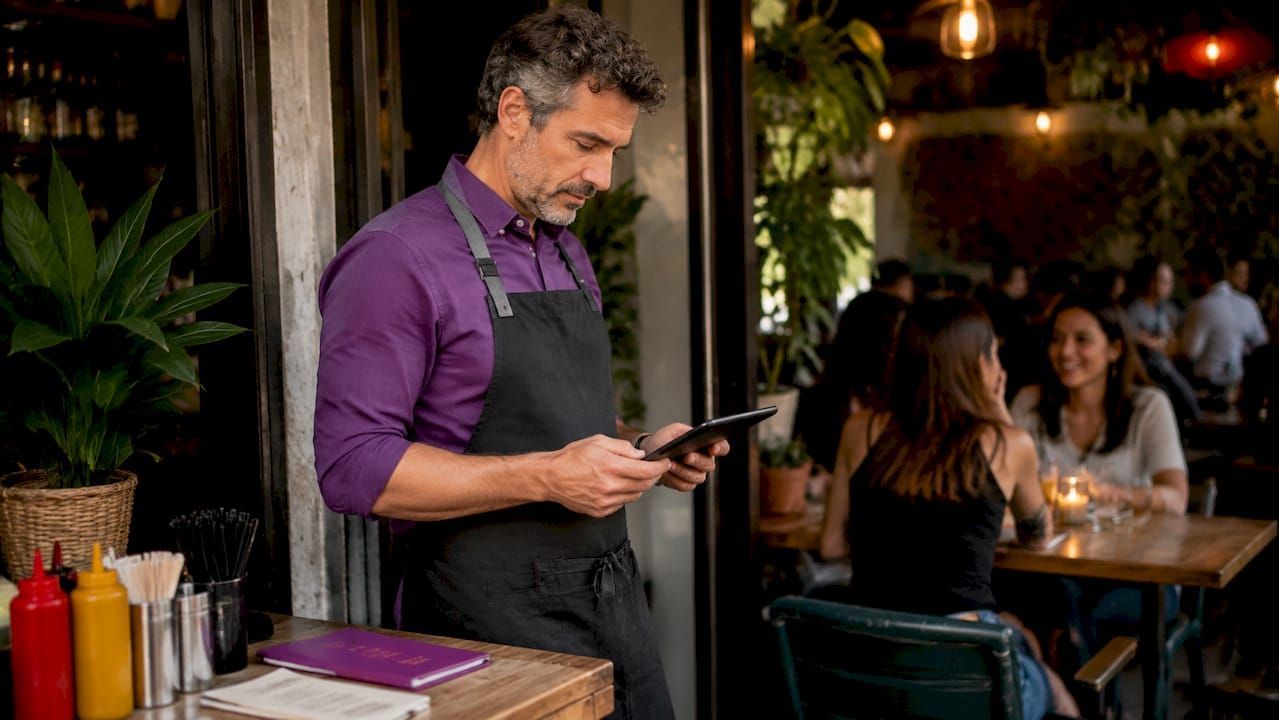
BrightLocal data shows that 80% of U.S. consumers search for local businesses weekly. That means your restaurant appears, or fails to appear, in front of potential customers at least once a week per person in your area. Restaurants that invest in digital marketing capture that traffic. Those that do not send it directly to competitors.
The stakes are concrete. 33% of diners discover restaurants through Google alone. Search visibility is not a bonus feature. It is the front door to your business for one in three new customers.
What components make up effective digital marketing for restaurants?
Effective restaurant digital marketing is built on five interconnected components. Each one serves a specific role in attracting and converting customers.
- A responsive, user-friendly website. Your website is your digital storefront. A well-designed restaurant website loads fast, displays your menu clearly, and works on mobile devices. A clunky or hard-to-navigate site wastes marketing spend by sending traffic to competitors instead of converting it to reservations or orders.
- Google Business Profile and local SEO. Claiming and optimizing your Google Business Profile puts your restaurant on the map, literally. Accurate hours, photos, and contact details directly influence whether customers choose you or scroll past.
- Active social media engagement. Platforms like Facebook, Instagram, and TikTok are where food decisions get made visually. 74% of consumers active on social media are more likely to visit a restaurant they follow or interact with online.
- Review management. Responding to reviews is not optional. Responding to customer reviews increases the likelihood of a new customer choosing your restaurant by 41%. That is a measurable conversion lift from a free activity.
- Direct ordering channels. 58% of customers prefer ordering directly from a restaurant's app or website rather than third-party delivery platforms. Direct channels also give you ownership of customer data, which fuels retention.
Pro Tip: Before spending a dollar on paid ads, confirm your Google Business Profile is fully filled out, your website loads in under three seconds on mobile, and your menu is current. These three fixes cost little and convert the most.
How does digital marketing influence customer discovery and decisions?
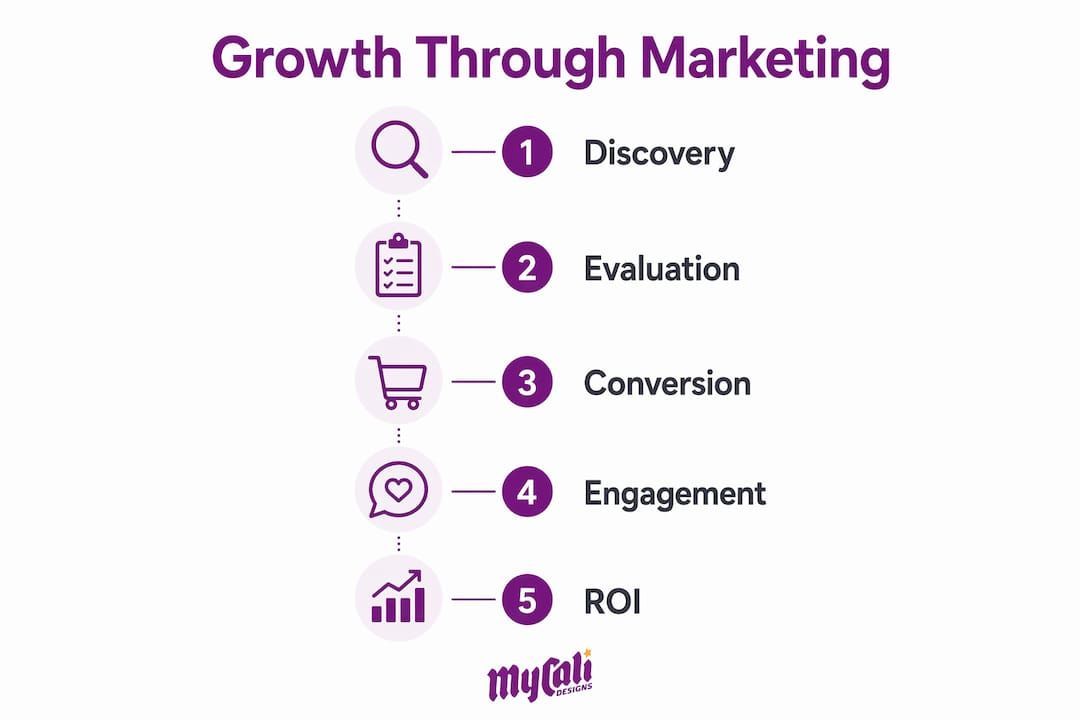
Every customer goes through three phases before they walk through your door or place an order: discovery, evaluation, and conversion. Digital marketing shapes all three.
Discovery
Search engines and maps are where most restaurant decisions begin. A customer types "tacos near me" or "best brunch in city]" and your restaurant either appears or it does not. [Restaurants with inaccurate business profiles, outdated menus, or inconsistent online information lose potential customers before social media even enters the picture. Getting found requires accurate, consistent data across every platform where your restaurant is listed.
Evaluation
Once a customer finds your restaurant, they evaluate it in seconds. They look at photos, read recent reviews, check your hours, and scan your menu. Brand consistency across your website, Google profile, and social media pages builds trust fast. A restaurant with professional photos, a clear menu, and recent positive reviews wins the comparison almost every time.
Conversion
Conversion happens when a customer books a table, places an order, or walks in. Effective digital marketing connects discovery and evaluation to a frictionless next step. That means a clear "Order Now" button, a working reservation link, and a direct ordering channel that does not route customers through a third-party app.
The numbered sequence below captures how these phases build on each other:
- Customer searches for a restaurant type or cuisine in your area.
- Your listing appears with accurate information, strong photos, and recent reviews.
- Customer evaluates your profile against two or three alternatives.
- Consistent branding and positive reviews tip the decision in your favor.
- A direct, easy ordering path closes the conversion without friction.
Each step depends on the previous one. Skipping any phase breaks the chain and loses the customer.
What are the primary benefits of digital marketing for restaurant growth?
The benefits of digital marketing for restaurants go well beyond getting more clicks. They translate directly into revenue, loyalty, and competitive advantage.
Expanded reach. Foot traffic alone limits your audience to people who already pass your location. Digital marketing reaches customers across your entire city, or beyond, based on search intent and social discovery. A well-run Instagram account or a strong Google ranking puts your restaurant in front of people who have never driven past your door.
Built credibility. Consistent online information and proactive review responses build trust rapidly and distinguish restaurants in competitive markets. Customers trust restaurants that look active, professional, and responsive online. A restaurant with 200 reviews and a 4.5-star average beats one with 20 reviews and no responses, even if the food quality is identical.
Ongoing customer engagement. Email marketing and loyalty programs keep past customers coming back. A simple monthly email with a special offer or a new menu item costs almost nothing and generates repeat visits from your most valuable audience: people who already like your food.
Higher ROI from owned channels. An effective digital marketing strategy prioritizes owned digital channels before expanding into paid ads. Your website, email list, and Google profile are assets you control. Paid ads amplify what already works. Running ads without a solid website is like pouring water into a bucket with holes.
Pro Tip: Track where your reservations and orders originate each month. Even a simple spreadsheet showing "Google search," "Instagram," and "direct" helps you see which channels deserve more attention and which ones are underperforming.
| Benefit | What it means for your restaurant |
|---|---|
| Expanded reach | Attracts customers beyond your immediate neighborhood |
| Built credibility | Consistent info and reviews convert browsers into guests |
| Customer retention | Email and loyalty programs drive repeat visits |
| Higher direct revenue | Owned ordering channels cut third-party commission fees |
| Competitive advantage | Active digital presence wins customers from less visible rivals |
Which digital marketing strategies should restaurant owners prioritize first?
The most common mistake restaurant owners make is chasing advanced tactics before building the foundation. Paid ads, influencer partnerships, and TikTok campaigns all work better when the basics are solid. Marketing works best when discovery, conversion, and retention efforts are interconnected rather than treated as isolated actions.
Build in this order:
- Step 1: Google Business Profile. Claim it, verify it, and fill out every field. Add current photos, accurate hours, and your full menu. This single step improves local search visibility immediately.
- Step 2: A professional, mobile-ready website. Your site needs a clear menu, contact information, and a direct ordering or reservation option. Mycalidesigns builds custom restaurant websites designed to convert search traffic into real customers.
- Step 3: Review management. Ask satisfied customers to leave a review. Respond to every review, positive or negative, within 48 hours. This habit compounds over time and directly lifts your conversion rate.
- Step 4: Local SEO and email marketing. Optimize your website content for local search terms. Build an email list from day one using reservation confirmations, loyalty sign-ups, or in-store prompts. Email remains one of the highest-return channels for local food businesses.
- Step 5: Social media and paid ads. Once your foundation is solid, social media content and targeted local ads amplify what is already working. Knowing how to increase online visibility through paid channels becomes far more effective when your website and profiles are ready to convert that traffic.
This sequence prevents the most common waste: spending money on ads that send customers to a weak website or an incomplete Google profile.
Key takeaways
Digital marketing is the single most effective system restaurants have for turning online searches into paying customers, and it works only when discovery, evaluation, and conversion channels are built and maintained together.
| Point | Details |
|---|---|
| Online presence is non-negotiable | 80% of U.S. consumers search for local businesses weekly, making visibility critical. |
| Reviews drive conversions | Responding to reviews increases new customer likelihood by 41%. |
| Direct channels outperform third-party apps | 58% of customers prefer ordering directly from a restaurant's own site or app. |
| Build foundations before paid ads | Google profile, website, and reviews must be solid before ad spend pays off. |
| Marketing works as a system | Discovery, evaluation, and conversion must connect for digital marketing to deliver results. |
What I have learned watching restaurants win and lose online
Working with local businesses over the years, I have seen the same pattern repeat. A restaurant invests in a beautiful dining room, hires great staff, and crafts a menu worth talking about. Then they open a Facebook page, post twice, and wonder why new customers are not walking in.
The restaurants that grow consistently treat their digital presence like a second location. They update their Google profile the same week hours change. They respond to a one-star review with the same care they would give a guest complaining at the table. They build a website that actually reflects the experience inside. These are not complicated moves. They are consistent ones.
The biggest mistake I see is treating a website as a brochure rather than a sales tool. Your website should answer every question a first-time customer has, remove every barrier to ordering or booking, and reflect your brand well enough that someone who has never heard of you feels confident choosing you. A responsive restaurant website is not a luxury. It is the difference between a customer choosing you or the place down the street.
My honest advice: stop chasing the next platform and fix what you already have. A fully optimized Google profile and a well-built website will outperform a viral TikTok video for sustained, repeatable customer growth. Build the system first. Then amplify it.
— Cesar
How Mycalidesigns helps restaurants build a stronger digital foundation
Restaurants that want to grow online need more than a logo and a social media page. They need a connected system that works from the first search to the final order.
Mycalidesigns builds that system for local food businesses. From custom website development designed to convert search traffic into reservations, to SEO and digital marketing services that improve your Google visibility, every service is built around one goal: getting more customers through your door. We also handle branding and digital marketing campaigns for restaurants ready to grow beyond their current reach. If you want a clear picture of where your restaurant stands online and what to fix first, reach out to Mycalidesigns for a personalized review.
FAQ
Why do restaurants need digital marketing?
Digital marketing gives restaurants visibility where customers are actively searching. With 99% of consumers using the internet to find local businesses, restaurants without a strong online presence lose customers before any in-person interaction occurs.
What is the most important digital marketing tool for a restaurant?
A fully optimized Google Business Profile is the single highest-impact starting point. It directly controls how your restaurant appears in local search results and on Google Maps, where 33% of diners discover new restaurants.
How does social media help restaurants attract customers?
Active social media engagement on platforms like Instagram and Facebook increases visit likelihood. Data shows 74% of consumers active on social media are more likely to visit a restaurant they interact with online.
Does responding to reviews actually make a difference?
Responding to reviews increases the likelihood of a new customer choosing your restaurant by 41%. That makes review management one of the highest-return, lowest-cost activities available to restaurant owners.
Should restaurants use paid ads or focus on organic marketing first?
Build organic foundations first. A strong website, optimized Google profile, and active review management deliver consistent results before paid ads are introduced. Paid advertising amplifies what already works; it does not fix what is broken.
Recommended
Recent Posts