




The Role of Website Maintenance in Business Growth
The Role of Website Maintenance in Business Growth

TL;DR:
- Regular website maintenance is essential for small businesses to prevent hidden damage to search rankings and conversions. It includes core tasks such as security updates, content refreshes, performance optimization, backups, link repair, and SEO checks. Proactive upkeep supports brand trust, boosts growth, and costs less than reactive fixes or emergency rebuilds.
Website maintenance is the continuous process of updating, securing, and optimizing a site to protect its value as a business asset. For small and medium business owners, the role of website maintenance goes far beyond fixing broken pages. Neglect creates "silent" damage where search rankings and conversions erode gradually over months before you notice anything wrong. Treating upkeep as a strategic investment, not a technical chore, separates businesses that grow online from those that quietly lose ground.
What are the core components of website maintenance?
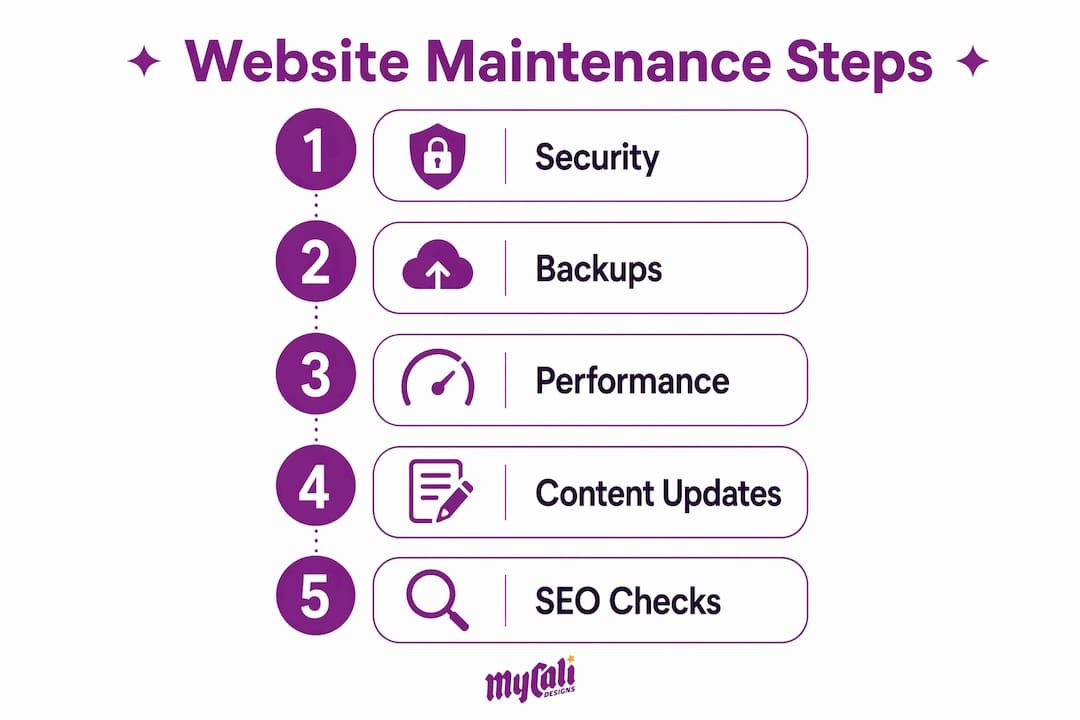
Website maintenance covers six distinct areas, each protecting a different part of your site's health. Understanding what each area does helps you prioritize where to focus first.
- Security updates. CMS platforms and third-party plugins require regular patches to close vulnerabilities that hackers actively scan for. An unpatched plugin is an open door.
- Content updates. Outdated pricing, old team photos, or expired promotions signal neglect to visitors. Fresh, accurate content also aligns with what search algorithms reward.
- Performance optimization. Load speed and mobile responsiveness directly affect both search rankings and how long visitors stay on your site. A one-second delay in load time can push a visitor to a competitor.
- Backups and recovery. Automated, off-site backups act as a safety net when servers fail or a cyberattack hits. Without them, a single incident can wipe out years of content and customer data.
- Broken link repair and database optimization. Broken links frustrate users and harm rankings; fixing crawl errors keeps both visitors and search engines moving through your site smoothly.
- SEO maintenance. Metadata accuracy, sitemap updates, and structured data checks keep your pages visible. This is where website maintenance and SEO strategy overlap most directly.
Pro Tip: Run a monthly broken link scan using a free crawler tool. Even a handful of 404 errors can chip away at your domain authority over time.
Each of these components works together. Skipping one creates a weak point that affects the others. Security gaps slow performance. Slow performance hurts SEO. Poor SEO reduces traffic. The chain reaction is predictable and preventable.
Why does regular upkeep matter so much for small businesses?
The business case for consistent site care is grounded in cost and trust. Reactive fixes always cost more than proactive ones. Security breaches and technical failures often force expensive emergency rebuilds that dwarf the cost of a monthly maintenance plan. Think of it like skipping oil changes on a vehicle. The engine runs fine until it doesn't, and then the repair bill is ten times what prevention would have cost.
"Business owners must shift their mindset to view website maintenance as a long-term strategic investment supporting growth, trust, and conversions. Experts recommend proactive care over reactive fixes to prevent costly downtime and security issues."
Slow or broken websites also destroy the first impression your brand makes. A visitor who lands on a page that loads slowly or throws an error does not wait around. They leave, and they rarely come back. That lost visit represents a real customer who chose someone else.
SEO rankings compound this problem. Search engines favor sites that are secure, fast, and regularly updated. A site left untouched for six months signals stagnation to Google's crawlers. Rankings slip quietly, organic traffic drops, and the business owner often blames the market rather than the website.

Updating website content consistently is one of the highest-return activities a small business can do for search visibility. Fresh content tells search algorithms that your site is active and relevant. It also gives returning visitors a reason to come back.
Trust is the final piece. A professional, error-free site signals that your business is reliable and attentive to detail. Visitors make that judgment in seconds. A well-maintained site builds confidence before a single word is read.
What are best practices for a website maintenance schedule?
Effective site care follows a rhythm. Organizing tasks by frequency keeps nothing from falling through the cracks.
- Daily. Check uptime monitoring alerts and review security scan reports. Automated tools handle most of this, but someone needs to act on the alerts.
- Weekly. Test all forms and checkout flows. Confirm backups completed successfully. Review any plugin or CMS update notifications.
- Monthly. Run a full broken link audit. Check page load speeds using tools like Google PageSpeed Insights. Review analytics for unusual traffic drops that could signal a technical issue.
- Quarterly. Conduct a full content audit. Update outdated pages, remove irrelevant posts, and refresh metadata. Review your hosting plan and server performance metrics.
Pro Tip: Always use a staging environment to test major updates before pushing them live. Testing updates in staging prevents a faulty plugin from taking your public site offline during business hours.
The question of who handles maintenance matters as much as what gets done. Many small business owners attempt DIY maintenance until a critical update breaks something they cannot fix. Assigning clear responsibility, whether to an internal team member or an outside professional, and documenting every procedure prevents gaps when people change roles.
| Maintenance approach | Best for | Key trade-off |
|---|---|---|
| Owner-managed DIY | Solo operators with technical comfort | Time-intensive; risk of missed updates |
| Part-time internal staff | Small teams with a tech-savvy employee | Limited expertise on complex issues |
| Professional agency | Growth-focused SMBs | Cost offset by reliability and expertise |
Integrating SEO and performance monitoring into your maintenance routine turns upkeep from a defensive task into an offensive growth tool. You stop reacting to problems and start spotting opportunities.
How does site upkeep build brand trust and support growth?
A well-maintained website does more than avoid problems. It actively builds the kind of trust that converts visitors into customers. Professional website maintenance transforms a site from a static brochure into a working business asset that supports growth continuously.
- Error-free experience. A site with no broken links, no outdated prices, and no slow-loading images tells visitors you pay attention. That attention transfers to how they expect you to treat them as a customer.
- Mobile responsiveness. More than half of web traffic now comes from mobile devices. A site that works perfectly on a phone signals that you understand your audience.
- Compliance protection. Regular maintenance supports compliance with accessibility laws and data protection regulations. Staying compliant reduces legal risk and protects your reputation.
- Content freshness. A content marketing process tied to your maintenance schedule keeps your site aligned with current marketing campaigns and customer questions.
- Competitive positioning. Your competitors' sites degrade if they neglect upkeep. A consistently maintained site pulls ahead in rankings and user experience without requiring a full redesign.
The connection between digital branding and site upkeep is direct. Your website is your brand's most visible touchpoint. How it performs is how your brand performs in the eyes of every visitor.
Key Takeaways
Regular website maintenance is the single most cost-effective way for small and medium businesses to protect their online presence, SEO rankings, and customer trust.
| Point | Details |
|---|---|
| Maintenance prevents compounding losses | Neglect erodes rankings and conversions silently before visible damage appears. |
| Six core components drive site health | Security, content, performance, backups, link repair, and SEO all require regular attention. |
| Proactive care costs less than reactive fixes | Emergency rebuilds after breaches cost far more than a consistent maintenance plan. |
| Staging environments prevent live site failures | Test all major updates before deployment to avoid downtime during business hours. |
| Upkeep directly supports brand trust | An error-free, fast, compliant site signals reliability to every visitor who lands on it. |
Why I treat maintenance as the most underrated growth lever
Most business owners think about their website in two modes: building it and redesigning it. The time in between gets ignored. That gap is where most of the damage happens, and it is also where the biggest opportunity sits.
I have seen businesses invest thousands in a new site, then watch their rankings slide within a year because nobody updated a plugin, refreshed a page, or checked a crawl report. The site looked fine on the surface. Underneath, it was losing ground every week.
The misconception I hear most often is that maintenance is an IT task. It is not. It is a business decision. Every week you delay a security patch is a week your customer data is at risk. Every month you skip a content audit is a month your competitors gain ground in search results. These are not technical problems. They are revenue problems.
The businesses that treat upkeep as a growth function, not a cost center, are the ones that build durable online presence. They do not need to redesign every two years because they never let the site degrade in the first place. If you are not sure where your site stands right now, that uncertainty is itself a signal worth acting on.
— Cesar
How Mycalidesigns supports your website's long-term health
Your website works hardest when someone is actively looking after it. At Mycalidesigns, we build and maintain websites for small and medium businesses that want a professional online presence without the technical headaches.

Our custom website development and maintenance services cover everything from security updates and performance checks to content refreshes and SEO audits. We act as your dedicated team so nothing slips through the cracks. Whether you need a full site build or ongoing care for an existing one, we handle the details while you focus on running your business. Explore our full agency services to see how we can support your site's growth this year.
FAQ
What is the role of website maintenance for a business?
Website maintenance keeps a business site secure, fast, and up to date so it continues to attract and convert visitors. Neglecting it leads to declining search rankings, security vulnerabilities, and lost customer trust.
How often should a small business update its website?
Security scans and backup checks should happen daily or weekly, while content audits and performance reviews work best on a monthly and quarterly schedule.
Does website maintenance affect SEO rankings?
Yes. Search engines favor sites that are secure, fast, and regularly updated. Skipping maintenance tasks like fixing broken links or refreshing metadata causes rankings to drop over time.
What happens if you ignore website upkeep?
Ignored upkeep leads to compounding risks including security breaches, slow load times, broken pages, and eroding search visibility. Emergency repairs after a failure cost significantly more than routine maintenance.
Should I hire a professional for website maintenance?
Growth-focused small and medium businesses benefit most from professional maintenance. An agency handles technical updates, monitors performance, and catches issues before they become costly problems.
Recommended
Recent Posts